Serving with Authority: What Tea Ceremony Masters Taught Silicon Valley About Leading Without Ego
There is a particular kind of silence that settles over a proper tea room. It is not the silence of absence, but of extreme presence—every gesture weighted, every object in its rightful place, the host's entire being oriented toward the guest. For centuries, this atmosphere has been cultivated by masters of chanoyu, the Japanese way of tea. Today, in an unlikely migration, that same discipline is finding students in the conference rooms and leadership retreats of America's most ambitious companies.
The phenomenon may seem eccentric at first glance. Yet for those who have sat within the four walls of a chashitsu—the traditional tea room—and watched a seasoned practitioner move through the ritual with unhurried precision, the relevance to organizational leadership becomes difficult to dismiss.
The Paradox at the Center of the Bowl
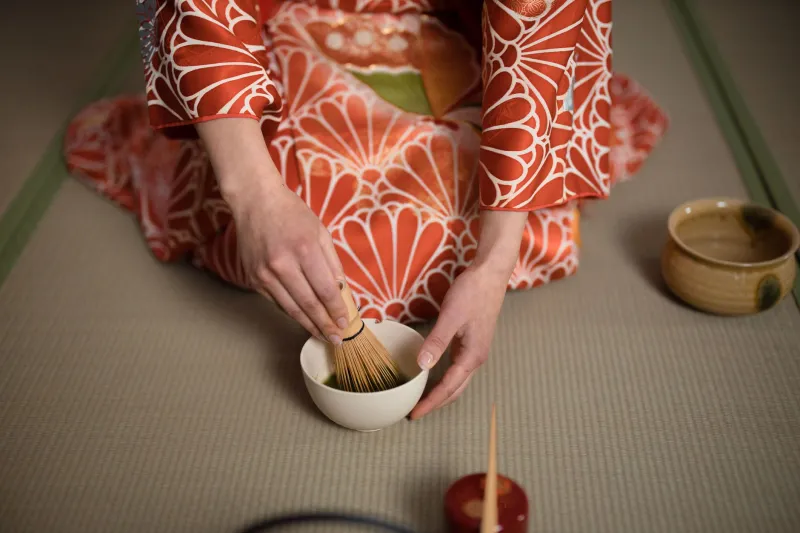
Chanoyu presents an immediate contradiction to Western notions of executive power. The host, who in any conventional frame of reference holds authority over the gathering, spends the entirety of the ceremony in an act of service. Every motion—the cleaning of the chakin cloth, the measured scooping of matcha, the rotation of the bowl before offering it—is performed not for self-display but for the singular comfort and elevation of the guest.
Yet this is precisely where American leaders are discovering something transformative. The tea master does not diminish herself through service. Rather, through complete mastery of form and an unwavering orientation toward the other, she commands a room more absolutely than any CEO who has ever raised her voice in a quarterly review.
"What struck me immediately was the confidence," recalls one San Francisco-based technology executive who asked to remain anonymous. "The sensei never sought approval. She wasn't performing. She simply knew what she was doing and why, and that certainty was more commanding than anything I had witnessed in twenty years of corporate leadership."
Precision as a Philosophy, Not a Procedure
At the heart of chanoyu lies a concept that practitioners call keiko—a form of practice so continuous and self-correcting that mastery is understood never to be fully achieved. One does not complete the study of tea ceremony; one deepens it, indefinitely. This stands in stark contrast to the achievement-oriented culture of American entrepreneurship, where credentials are collected, skills are checked off, and expertise is declared.
For executives accustomed to projecting certainty, the idea that refinement is perpetual—and that admitting this openly is a mark of strength rather than weakness—represents a genuine philosophical disruption. Several leadership coaches working with tech-sector clients have begun incorporating this framework explicitly, asking executives to identify not what they have mastered but where they are still in earnest practice.
The late Sen Sōshitsu XV, former Grand Master of the Urasenke school of tea, wrote extensively about the way in which keiko cultivates a particular form of attention—one that is neither anxious nor complacent, but alive to the present moment and its demands. It is, in essence, a management philosophy disguised as a domestic ritual.
The Hierarchy That Bows
Chanoyu is not without hierarchy. The relationship between sensei and student is formal, clear, and deeply respected. Students do not question foundational forms; they absorb them through repetition across years. Yet within this structure exists a remarkable quality of mutual regard. The teacher bows to the student. The host honors the guest above herself. Rank does not exempt one from courtesy—it demands more of it.
This is the dimension of tea ceremony that most consistently surprises American business leaders. The hierarchical structure they recognize; the humility embedded within it, they do not. In many corporate cultures, authority and deference flow in one direction only, downward. Chanoyu inverts this entirely while paradoxically strengthening the teacher's moral authority.
Leadership consultant Dana Hirsch, who has facilitated immersive chanoyu experiences for executives in both New York and the Bay Area, describes the reaction she most frequently observes: "There is usually a moment, somewhere in the third or fourth session, when a senior leader realizes they have been confusing status with service. The tea ceremony separates those two things completely, and once you see the separation, you cannot unsee it."
Hosting as a Strategic Competency
One of chanoyu's foundational principles is omotenashi—a form of hospitality so complete that it anticipates the guest's needs before they are expressed. The tea host considers the season, the quality of light, the temperament of those gathered, and selects every element of the gathering accordingly. Nothing is incidental. The flower in the alcove, the scroll on the wall, the temperature of the water—each communicates care and communicates it silently.
For executives who spend considerable energy designing customer experiences, investor presentations, or team environments, the concept of omotenashi offers an unexpectedly rigorous framework. It asks not simply what a meeting or product delivers, but what it feels like to be received by it. It repositions the leader as host rather than performer—a subtle but consequential shift.
Several companies in the Pacific Northwest and Northern California have quietly begun incorporating hospitality-centered design thinking into their internal culture practices, drawing directly from omotenashi principles. The result, according to early adopters, is a measurable improvement in team cohesion and a reduction in the performative posturing that often stalls collaborative decision-making.
What the Tea Room Teaches That the Classroom Cannot
Perhaps what is most striking about this movement is its embodied nature. One does not study chanoyu through a podcast or a business book. One sits on a tatami mat, handles a chawan with unsteady hands, and submits to correction from a teacher who has devoted decades to a practice that the student is only beginning to comprehend. The physical humility of the experience is inseparable from its intellectual content.
In an era when leadership development has become increasingly abstracted—distilled into frameworks, keynote addresses, and personality assessments—there is something quietly radical about a discipline that insists on the primacy of embodied learning. The tea room does not flatter its students. It reveals them.
For American entrepreneurs who have built entire identities around disruption, speed, and visible achievement, submitting to a centuries-old ritual under the guidance of a teacher who will not be rushed is itself the lesson. The michi—the way—of tea does not accelerate to meet ambition. It asks ambition to slow down, to bow, and to begin again.
In that beginning, more than a few leaders have discovered something they did not know they were looking for: a form of authority grounded not in dominance, but in devoted, meticulous care for others.