Strike, Breathe, Belong: How Taiko Drumming Is Transforming Urban Wellness in America
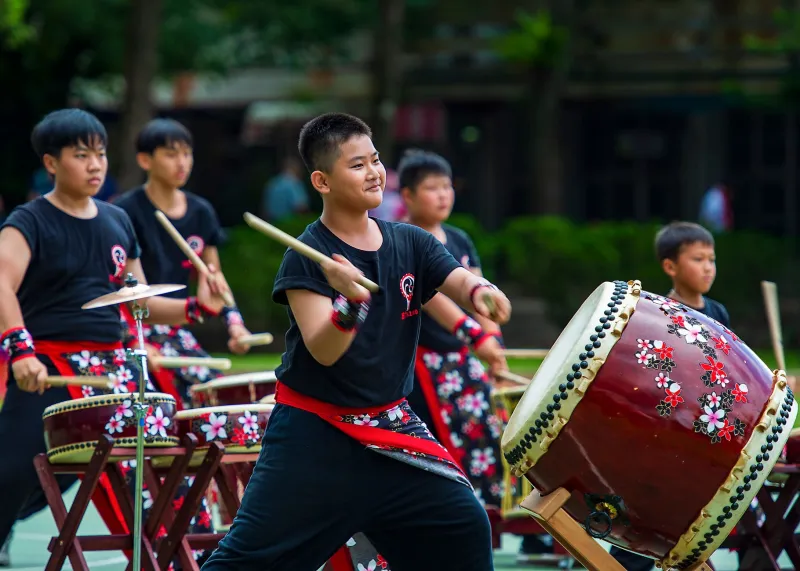
On a Thursday evening in a converted warehouse space in Portland, Oregon, sixteen people stand before large barrel drums, sweat already forming at their temples before a single beat has been struck. They are a cross-section of the city — a software engineer, a high school art teacher, a veteran navigating post-traumatic stress, a retired nurse. What they share, at least for the next ninety minutes, is the intention to hit something very hard, in community, with purpose.
This is taiko. And it is growing.
The Ancient Roots of an Enduring Sound
Taiko — literally meaning "great drum" or, more broadly, any drum in Japanese — carries a history that stretches back more than two thousand years on the Japanese archipelago. In its earliest forms, taiko served sacred and civic purposes: summoning deities during Shinto ceremonies, signaling armies across battlefields, marking the rhythms of agricultural festivals. The distinctive o-daiko, a drum carved from a single log and often measuring several feet in diameter, was considered a vessel through which divine energy could move.
Ensemble taiko performance as a modern art form largely emerged in postwar Japan, crystallized by the pioneering work of Daihachi Oguchi in the 1950s, who adapted jazz ensemble sensibilities to traditional percussion. By the 1960s, the form had crossed the Pacific. San Jose Taiko, founded in 1973 in California's Santa Clara Valley, is widely credited as the first community taiko group in the United States — born explicitly from Japanese American identity politics during the civil rights era, the drums a reclamation of cultural heritage.
Today, the Taiko Community Alliance estimates that more than two hundred taiko groups are active across the country. The demographics of these groups, however, have shifted considerably.
Beyond Performance: The Wellness Turn
For much of its American life, taiko existed primarily as a performance art — a spectacular stage experience characterized by choreographed athleticism and thunderous sound. What has changed in the past decade is the emergence of participatory taiko: drop-in community circles, therapeutic drumming workshops, and wellness retreats that position the practice not as spectacle but as somatic experience.
"People come in thinking they're going to learn a skill," says Mariko Sato, a third-generation Japanese American who leads community workshops in the Chicago area. "What they discover is that the drum is a mirror. The way you hit it tells you everything about where you're holding tension, where you're afraid to commit."
Sato's observation aligns with what sound therapists and somatic practitioners have been articulating for years. Unlike passive sound bath modalities — gongs, singing bowls, ambient frequencies — taiko demands active physical participation. The practitioner does not receive sound; the practitioner generates it. This distinction, subtle on paper, is profound in practice.
Dr. James Whitfield, a licensed clinical psychologist in Seattle who incorporates rhythm-based interventions into his trauma work, has observed consistent results among clients who participate in community taiko sessions. "Trauma frequently manifests as a disconnection from the body," he explains. "Taiko requires you to be fully inhabiting your physical form — your stance, your breath, the arc of your arms. There is no dissociating from that experience. The drum demands presence."
The Stressed Professional and the Struck Drum
Beyond clinical settings, taiko is finding an unlikely constituency among burned-out professionals in major metropolitan areas. In cities where meditation apps and yoga studios have become almost satirically ubiquitous, taiko offers something categorically different: permission to be loud, forceful, and unrefined.
"I sat with breathwork for two years," admits Daniel Reyes, a product manager in San Francisco who joined a taiko circle eighteen months ago. "I found it genuinely helpful, but there was always this part of me that needed to do something physical, something that made noise. Taiko felt like the first wellness practice that didn't ask me to be quiet and small."
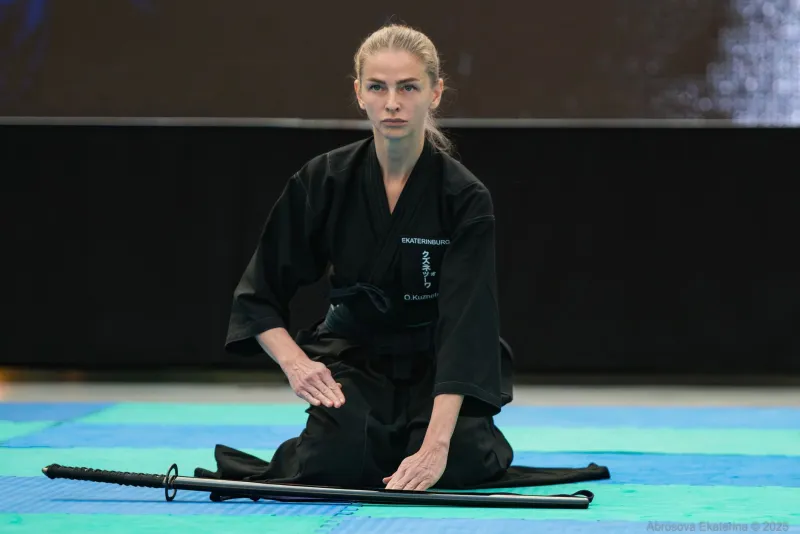
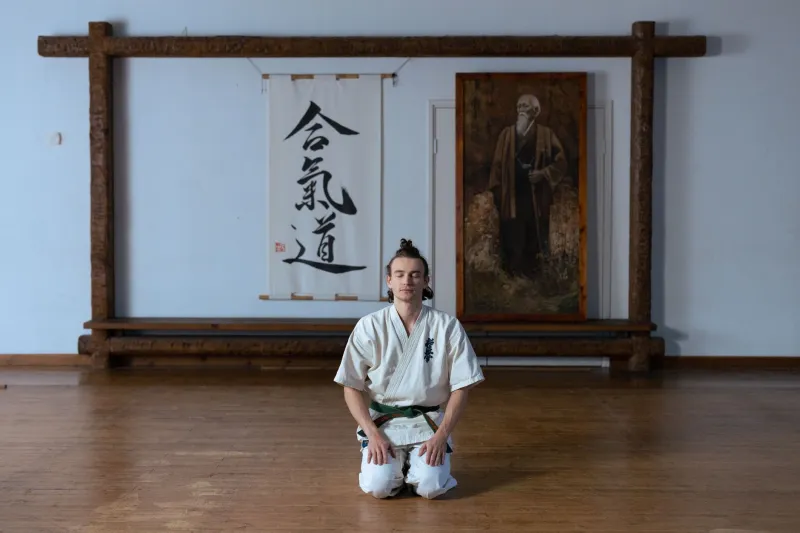
This sentiment recurs frequently among practitioners. The Japanese concept of ki — vital energy, roughly analogous to the Chinese qi — is central to taiko philosophy. Instructors speak of channeling ki through the body and into the drum head, a transmission rather than an assault. The physical form demanded by taiko — wide stance, engaged core, arms moving from the shoulder rather than the wrist — mirrors the postural principles of martial disciplines such as aikido and kendo.
In this way, taiko occupies an instructive position within the broader taxonomy of Japanese wellness arts. It is simultaneously expressive performance, physical discipline, and meditative practice. The ma — the meaningful silence between beats — is considered as important as the strike itself, a principle that maps directly onto mindfulness traditions.
Community as Healing Architecture
Perhaps the most underexamined dimension of taiko's wellness appeal is its irreducibly communal nature. Unlike most contemporary wellness modalities, which are fundamentally individualistic even when practiced in groups, taiko cannot function without ensemble. The ensemble must listen, adjust, and breathe together. The group's sound is only as coherent as each member's willingness to subordinate individual expression to collective rhythm.
"In Japanese, we talk about kiai — the unified spirit of a group," says Sato. "When a taiko ensemble achieves kiai, you can feel it physically. There's a resonance that goes beyond the individual drums. That feeling of being part of something larger than yourself — that is, I think, what many people are quietly starving for."
For veterans and trauma survivors in particular, this aspect of taiko has proven meaningful. Several VA-affiliated programs across the country have quietly incorporated taiko workshops into their complementary care offerings, noting improvements in social engagement and emotional regulation among participants.
The Way Forward
The expansion of taiko into American wellness spaces is not without its complexities. Questions of cultural stewardship arise whenever a practice with deep roots in specific communities is adopted broadly. Many taiko instructors are thoughtful about this tension, emphasizing historical context in their teaching and acknowledging the Japanese American community organizations from which the American taiko tradition grew.
What seems clear, however, is that taiko is meeting a genuine and pressing need. In a cultural moment defined by digital overstimulation, physical isolation, and a pervasive sense of powerlessness, the act of striking a great drum — loudly, together, in rhythm — carries a meaning that transcends trend.
The voice of the drum is old. It is only the ears that are new.