The Quiet Depth Beneath the Surface: How Shibui Is Challenging American Ideas of Beautiful Simplicity
There is a particular quality that Japanese aesthetics scholars have long recognized in certain objects — a lacquered tea bowl worn smooth at the rim, a length of undyed linen that deepens in color with each washing, a garden stone whose surface holds decades of moss like a quiet confidence. This quality resists easy translation. It is not beauty in any conventional Western sense. It does not announce itself. It accumulates.
The Japanese call it shibui.
Defining the Indefinable
Shibui (渋い) and its noun form shibusa occupy a distinctive position within the constellation of Japanese aesthetic concepts. Where wabi-sabi — perhaps the most widely recognized of these concepts in the West — concerns itself with the beauty of transience and imperfection, shibui operates on a different register. It describes a quality of refined understatement: beauty that is austere without being cold, complex without being complicated, simple without being empty.
The word's etymology is instructive. Shibui originally described the astringent taste of an unripe persimmon — sharp, mouth-puckering, the opposite of sweetness. Over centuries, the term migrated from the gustatory to the aesthetic, coming to describe objects, spaces, and even personalities that possess a certain dry, undemonstrative elegance. A shibui object does not flatter the observer. It rewards sustained attention.
Design historian and cultural interpreter Naomi Hayashi, who divides her time between Kyoto and New York, articulates the distinction with characteristic precision. "Western minimalism, particularly in its current popular form, is primarily about subtraction," she observes. "Remove enough, and what remains is considered beautiful. Shibui is not about removal — it is about depth. An object can be shibui because of what it contains, not only because of what it lacks."
The Limits of American Minimalism
To understand why shibui is attracting serious attention in American design circles, it helps to understand the growing unease with the minimalism that has dominated interior design and lifestyle culture for the better part of two decades. Popularized through a combination of Scandinavian design influence, the decluttering movement, and the aesthetic vocabulary of tech-industry office spaces, American minimalism has become — paradoxically — a style rather than a philosophy.
The result is spaces that are visually sparse but emotionally thin. Bare white walls. Furniture selected for photographic legibility rather than tactile pleasure. Interiors that read beautifully in real estate listings and feel hollow to inhabit. The minimalist aesthetic, in its commodified American form, has become as much a performance of taste as any of the maximalist styles it displaced.
"We have confused emptiness with peace," says Marcus Ellroy, an interior designer based in Brooklyn whose recent residential projects have drawn extensively on Japanese spatial principles. "A room can be stripped of everything and still feel anxious. Shibui is not about having less — it's about having what is genuinely right, and allowing those things to age and deepen over time."
Ellroy's point touches on one of shibui's most demanding requirements: patience. A shibui object is rarely purchased; it is often made, and it is always lived with. Its quality emerges over time, through use and care and the gentle accumulation of experience.
Shibui in American Spaces
Across the country, a growing cohort of designers, architects, and homeowners are engaging with shibui as a generative framework rather than a decorative style. The distinction matters. Shibui cannot be achieved through a shopping list.
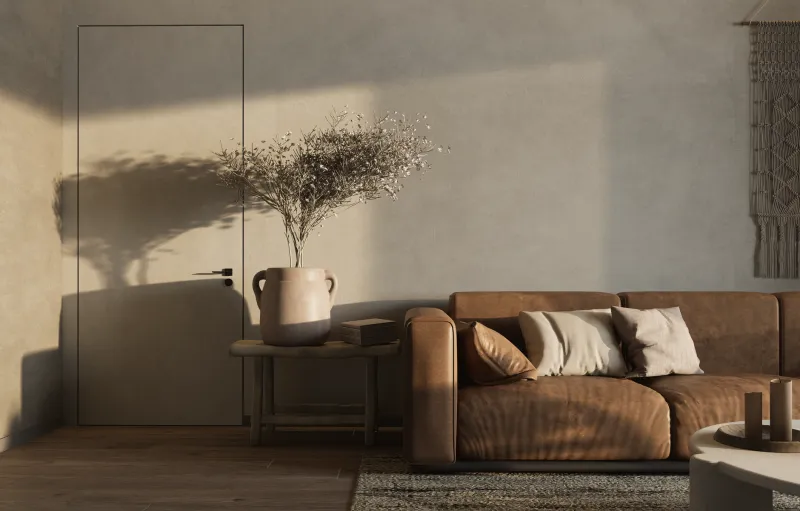
In Portland, architect Suki Tanaka has built a practice around residential projects that attempt to embody shibui principles. Her approach involves extended conversations with clients about how they actually move through and inhabit their homes — which surfaces they touch, where natural light falls at different hours, which objects carry genuine personal history. The resulting interiors are not sparse. They are selective.
"I use a lot of natural materials that patinate — oiled oak, unglazed ceramic, hand-planed stone," Tanaka explains. "Nothing in a shibui space should look like it arrived yesterday. Or rather — it can arrive yesterday, but it should look as though it belongs to a longer story."
This emphasis on materials that age gracefully extends into the realm of fashion and personal style. Several American clothing designers have begun invoking shibui explicitly in their work — not as a marketing term but as a genuine design constraint. Garments cut in natural, undyed fibers. Silhouettes that are neither fashionable nor unfashionable, but simply well-considered. Clothing that, in the words of one Brooklyn-based designer, "becomes more itself over time."
Complexity Within Restraint
One of the more counterintuitive aspects of shibui, and one that distinguishes it most sharply from Western minimalism, is its comfort with a particular kind of complexity. A shibui textile may involve extraordinarily intricate weaving — but the pattern will be subtle, perceptible only in certain light, rewarding close attention without demanding it. A shibui garden may contain dozens of carefully considered elements, but the overall impression will be one of naturalness rather than artifice.
This is the concept of kakushi aji — hidden flavor — which operates as a kind of sub-principle within shibui aesthetics. The finest things, the tradition suggests, do not reveal themselves immediately. They give gradually, over repeated encounters.
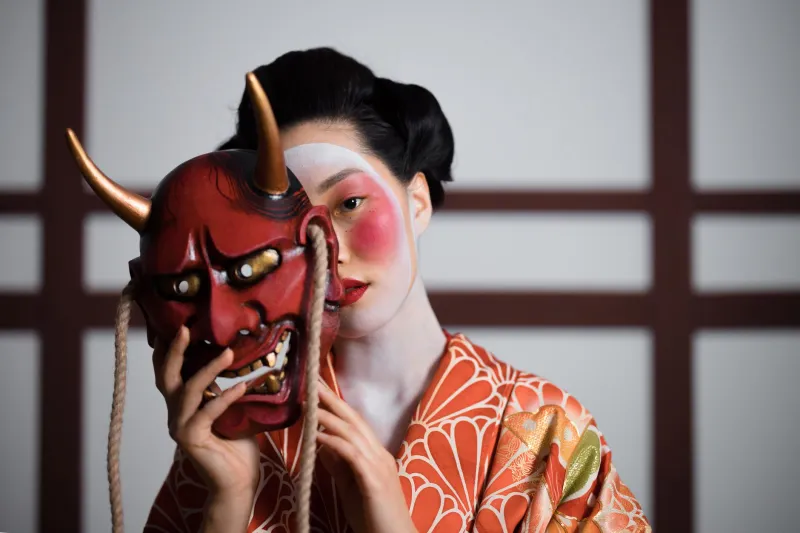
Hayashi draws a direct parallel to the Japanese performing arts. "In Noh theater, the most skilled actor appears to do almost nothing," she notes. "But the stillness contains everything. Shibui is the visual equivalent of that stillness — it holds more than it shows."
Toward an American Shibui
The adoption of shibui principles by American designers and consumers raises questions that are both practical and philosophical. Can a concept so deeply embedded in Japanese cultural history — in specific craft traditions, in particular relationships to impermanence and material — be meaningfully transplanted into American life?
Most practitioners who engage seriously with the concept are careful about this question. The goal, they suggest, is not imitation but orientation — using shibui as a compass rather than a blueprint. The specific materials, forms, and traditions will necessarily be different in a Chicago apartment than in a Kyoto machiya. What can travel is the underlying disposition: the preference for depth over display, for materials that earn their place, for beauty that asks something of the beholder.
"Shibui teaches you to slow down your looking," says Ellroy. "In a culture that is relentlessly fast and relentlessly loud, that is not a small thing."
In this sense, shibui is less an aesthetic import than a discipline — one that asks its practitioners to resist the immediate, to distrust the obvious, and to find in restraint not emptiness, but a quieter kind of fullness. That, perhaps, is the most Japanese thing about it: the insistence that the deepest things reveal themselves only to those willing to wait.