Stillness in the Stem: How Ikebana Is Quietly Reshaping American Wellness Culture
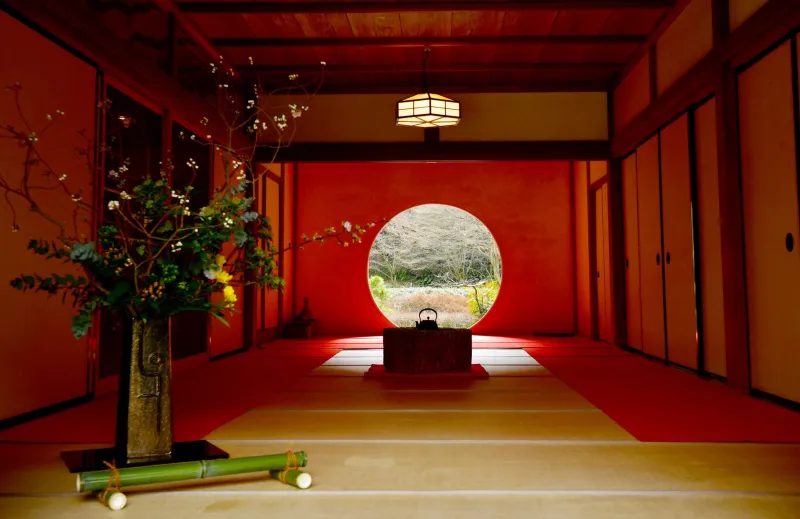
Across yoga studios, wellness retreats, and home practice spaces throughout the United States, a centuries-old Japanese discipline is finding an unlikely second home. Ikebana — the classical art of intentional flower arrangement — is drawing American practitioners who seek not merely beauty, but presence. What begins with a single stem and a shallow vessel often ends in something far more profound.
In a country where wellness culture has long favored the vigorous — hot yoga, breathwork, cold plunges — the quiet discipline of ikebana represents a meaningful counterweight. It asks nothing dramatic of the body. It demands, instead, the full attention of the mind.
The Philosophy Behind the Practice
To understand why ikebana resonates so deeply with contemporary mindfulness seekers, one must first appreciate what separates it from the Western tradition of floral design. Where conventional flower arranging tends to celebrate abundance — layered blooms, dense color, symmetrical fullness — ikebana operates from an entirely different philosophical premise.
Rooted in Buddhist principles introduced to Japan from China during the sixth century, ikebana originally served as a ritual offering. Over the following millennium, it evolved into a highly codified art form encompassing dozens of distinct schools, among them Ikenobō, Ohara, and Sōgetsu. Each school carries its own aesthetic grammar, yet all share a commitment to the same foundational values: ma (negative space), wabi (austere simplicity), and a reverence for the natural world as it exists in a given season.
A practitioner does not impose a vision upon the flowers. Rather, she listens to them — observing the natural angle of a branch, the weight of a bloom, the way morning light falls across a leaf. This orientation toward receptivity, rather than control, is precisely what draws the modern mindfulness practitioner.
American Instructors Speak to the Shift
Caroline Matsuda, a certified instructor with the Sōgetsu School who teaches workshops in Portland, Oregon, has watched enrollment in her classes nearly double over the past three years. She attributes much of that growth to practitioners arriving not from a background in floristry, but from meditation and therapeutic communities.
"People come in saying they've tried every app, every breathing technique," she explains. "And then they sit down with a kenzan — the pin frog that holds the stems — and within twenty minutes, something shifts. They stop thinking about their to-do list. They are simply here, with this branch, in this moment."
Matsuda's observation aligns with emerging research into what psychologists term "flow states" — the condition of absorbed, effortless engagement that dissolves the boundary between practitioner and task. Activities that combine gentle physical movement with precise, deliberate attention are particularly effective at inducing this state. Ikebana, with its slow-paced handling of materials and its demand for compositional decision-making, appears to meet those criteria with unusual consistency.
In Austin, Texas, wellness educator and ikebana practitioner David Kwan integrates the art form into corporate mindfulness programming. "Executives arrive wired, distracted, already drafting emails in their heads," he says. "By the second arrangement, that urgency dissolves. The practice creates a kind of temporal boundary — a sacred pause — that most people have no other access to during their workday."
Seasonal Awareness as a Mindfulness Anchor
One of ikebana's most distinctive contributions to the wellness conversation is its insistence on kisetsukan — an acute sensitivity to the current season. Unlike the year-round availability of hothouse flowers that defines the modern floral industry, traditional ikebana calls upon the practitioner to work with what nature actually offers at a given time. Bare winter branches carry as much value as spring cherry blossoms; the withered edge of an autumn leaf is not a flaw to be hidden, but a truth to be honored.
For American practitioners living in environments of manufactured climate control and algorithmically curated content, this seasonal anchoring can be quietly revelatory. "I started noticing what was actually growing outside my window," reflects Rachel Torres, a nurse practitioner from Chicago who began studying ikebana in 2021 following pandemic-related burnout. "Ikebana gave me a reason to pay attention to the world again. It made the ordinary feel significant."
This quality — the elevation of the overlooked — is perhaps the art form's most potent therapeutic gift.
Beginning the Practice: Guidance for the Curious
For readers drawn to explore ikebana as a contemplative discipline, the entry point is deliberately modest. No specialized greenhouse inventory is required. A single branch, a few stems from a neighborhood garden, or even dried materials gathered during a walk can serve as adequate starting material.
The following principles offer a foundation:
Work with three primary lines. Classical ikebana typically organizes its composition around three principal elements representing heaven (shin), human beings (soe), and earth (hikae). These need not be rigidly literal; they function as guides toward balance and intentional asymmetry.
Embrace empty space. Resist the impulse to fill. The spaces between stems are compositional elements as meaningful as the stems themselves. Allow the arrangement to breathe.
Move slowly, and pause often. Set aside at least thirty minutes for a single arrangement. Step back frequently. The practice is not efficient by design — that resistance to efficiency is precisely its value.
Source locally and seasonally. Visit a farmers' market, a community garden, or simply observe what grows near your home. Letting the season guide your materials deepens the meditative dimension of the work.
Release attachment to the result. Traditional ikebana arrangements are often ephemeral, displayed briefly before being disassembled. The practice lies in the making, not the keeping.
The Way of the Flower
In Japanese, ikebana is sometimes rendered as kadō — 花道 — the Way of the Flower. That single character, dō, meaning "way" or "path," places it in the same philosophical family as kendō, judō, and chadō (the Way of Tea). Each of these disciplines understands its outward form — the sword, the throw, the bowl — as a vehicle for inner cultivation.
As ikebana takes root in American wellness culture, it carries this deeper inheritance with it. The flower arrangement on a studio shelf is never merely decorative. It is evidence of a moment of genuine attention — a small, quietly radical act in a culture that rarely stops moving long enough to notice a single stem.
For those willing to sit with that stillness, the practice offers something increasingly rare: the experience of being fully present with what is, exactly as it is, for exactly as long as it lasts.