Slow Theater in a Fast World: How Noh Is Finding a New Generation of American Devotees
In an era defined by algorithmic acceleration and shrinking attention spans, a growing number of young Americans are turning to one of Japan's oldest and most demanding theatrical traditions. Noh theater — spare, masked, and deliberately unhurried — is drawing Gen Z audiences in ways that would have seemed improbable a decade ago. What is it about this 600-year-old art form that speaks so directly to a generation raised on infinite scroll?
The Aesthetic of Absence
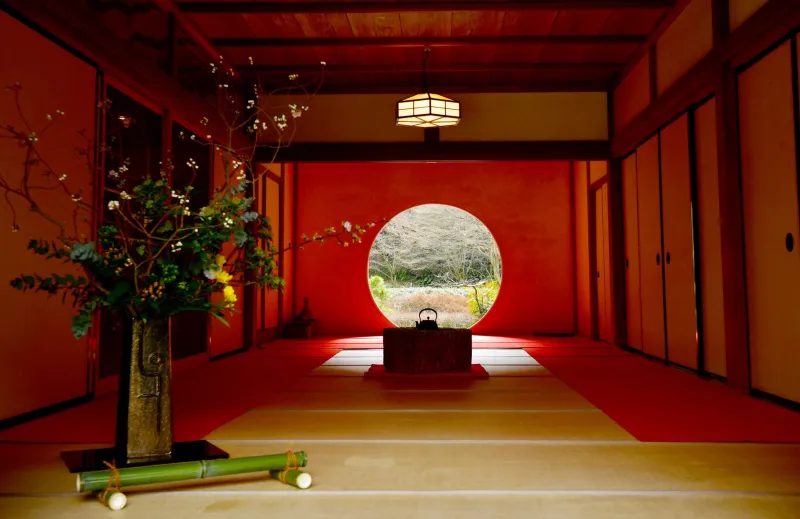
Noh makes no concessions to spectacle. A bare pine tree painted on a cypress-wood backdrop. A single masked actor moving with glacial precision across a polished stage. Chanting that seems to emerge from somewhere beneath language itself. Where contemporary entertainment competes for the viewer's nervous system, Noh asks the audience to do something almost radical: to wait, to attend, to let meaning arrive on its own terms.
For many young Americans who have grown up inside what researchers now call an "attention economy," this deliberate emptiness functions less like deprivation and more like relief. Cultural commentators have begun describing the phenomenon as "aesthetic detox" — the hunger for art that does not demand immediate emotional response but instead creates space for one to form organically.
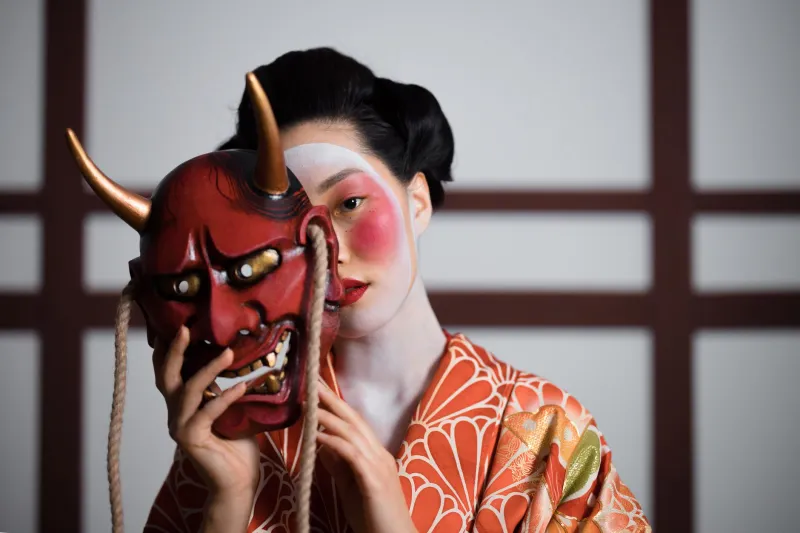
Noh's visual language is inseparable from this effect. The omote — the carved wooden masks worn by principal performers — occupy a deliberate zone between expression and blankness. A skilled shite, or lead actor, can shift the emotional register of a mask simply by tilting it a few degrees toward light or shadow. This economy of gesture, where the smallest movement carries enormous weight, stands in stark contrast to the hyperkinetic visual grammar of social media content. For Gen Z viewers encountering Noh for the first time, many describe the experience not as watching something foreign but as recognizing something forgotten.
Digital Pathways to an Ancient Stage
Paradoxically, the internet has become the primary gateway through which younger Americans are discovering this most analog of art forms. YouTube channels maintained by Japanese cultural institutions — some subtitled with genuine care for context — have accumulated millions of views from users outside Japan. TikTok accounts dedicated to traditional performing arts regularly feature short excerpts from Noh performances, often framed through the vocabulary of wellness or mindfulness rather than pure aesthetics. The comment sections of these videos reveal something striking: young viewers in cities like Portland, Austin, and Brooklyn describing Noh as a form of meditation they had not known they were seeking.
Community organizations have taken note. The Japan Society in New York has reported sustained growth in attendance at its Noh programming among audiences under thirty-five. University Japanese studies departments across the country have incorporated Noh workshops into their curricula, finding that hands-on engagement with shimai — the dance element of Noh — resonates with students in ways that purely academic study does not.
Digital communities on platforms such as Reddit and Discord have also formed around the study of Noh, creating informal networks where enthusiasts share translations of classical texts, discuss the philosophical dimensions of yugen — the profound, mysterious beauty at Noh's aesthetic core — and even organize group viewings of archived performances. These communities are notably international, with American participants frequently learning alongside practitioners in Japan, the United Kingdom, and Brazil.
The Psychology of the Mask
Beyond aesthetics, there is something psychologically compelling about Noh's approach to identity and emotion that appears to resonate with Gen Z's own preoccupations. This is a generation that has grown up managing multiple simultaneous self-presentations across different platforms, acutely aware of the gap between performed identity and interior experience. Noh, which frequently centers on characters suspended between worlds — ghosts unable to relinquish attachment, warriors reliving the moment of their deaths, lovers transformed by jealousy into something inhuman — addresses this liminality with unusual directness.
The mask does not conceal the actor so much as it reveals a truth that ordinary facial expression cannot carry. This inversion — that concealment enables a deeper form of disclosure — has attracted the attention of therapists and performance scholars alike. Several practitioners working in drama therapy in the United States have begun incorporating elements of masked performance into clinical work, citing Noh's capacity to externalize internal states as therapeutically potent.
The philosophical tradition underpinning Noh, shaped in large part by the theorist Zeami Motokiyo in the fourteenth and fifteenth centuries, is itself a sophisticated inquiry into the nature of performance, presence, and beauty. Zeami's treatises on the art — texts that circulated in secret for centuries before becoming publicly available — describe a quality called hana, or flower: the ineffable vitality that distinguishes true mastery from mere technique. Young Americans engaging seriously with Noh frequently encounter these texts and find in them a vocabulary for artistic experience that contemporary culture rarely provides.
A Practice, Not Only a Performance
What distinguishes this new wave of interest from earlier moments of Western fascination with Japanese culture is its emphasis on participation rather than consumption. Many young Americans drawn to Noh are not content merely to watch; they want to learn the utai (vocal chanting), study the kata (prescribed movement forms), and understand the philosophical framework within which the art operates. This impulse aligns with broader Gen Z tendencies toward craft, embodied knowledge, and what might be called meaningful difficulty — the desire for skills that require genuine time and commitment to acquire.
A handful of teachers in major American cities now offer introductory Noh workshops, and waiting lists for these programs have grown considerably in recent years. Some participants describe the physical discipline of Noh training — the cultivation of a low, stable center of gravity, the control required to move in the characteristic suriashi gliding step — as comparable in its demands to practices like yoga or martial arts, but with an additional layer of expressive and intellectual depth.
In this sense, Noh is finding its American audience not despite its difficulty but because of it. In a cultural moment saturated with frictionless content, the art form's very resistance — its refusal to explain itself, to accelerate, to simplify — may be precisely the quality that makes it feel, to younger viewers, like something worth pursuing.
The voice of the way, as this publication takes as its guiding metaphor, does not shout to be heard. It waits. And it appears that a new generation is finally learning how to listen.