Between Mountain and Field: How Japanese Satoyama Wisdom Is Quietly Revolutionizing American Environmental Education
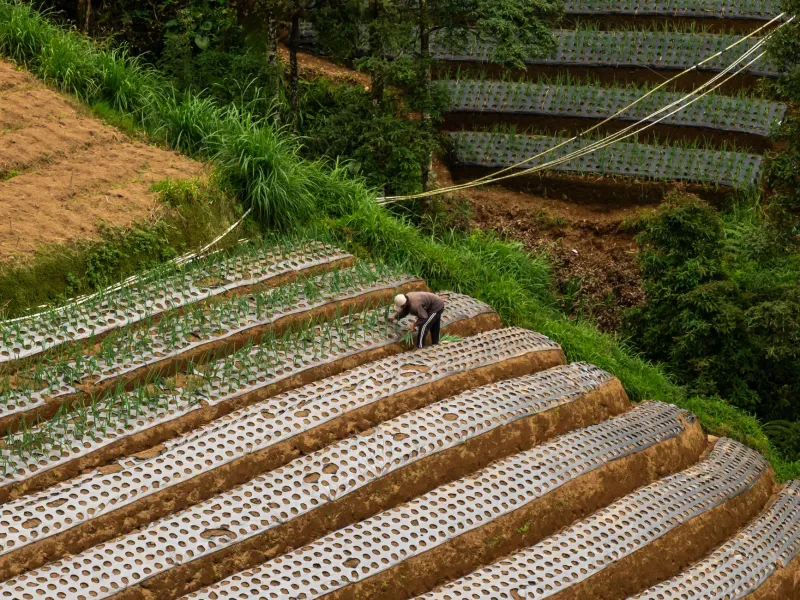
There is a word in Japanese ecological thought that does not translate cleanly into English, and perhaps that difficulty is itself instructive. Satoyama — rendered most literally as "village mountain" — describes the layered, living threshold between managed farmland and the wilder slopes beyond it. It is not wilderness. It is not agriculture. It is something older than both: a philosophy of coexistence that Japanese rural communities cultivated over centuries, and that modern environmental educators are now borrowing with growing urgency.
In classrooms from Vermont to Oregon, something is shifting. Teachers who once relied on textbooks and PowerPoint slides to convey the scale of ecological crisis are increasingly turning toward soil, seed, and seasonal rhythm. And a surprising number of them are finding their vocabulary — and their inspiration — in Japanese horticultural tradition.
The Limits of Abstract Literacy
American environmental education has long struggled with a fundamental tension. It teaches children that the natural world matters enormously, then confines them to chairs while conveying that message. The result, researchers have noted with increasing concern, is a generation fluent in the language of climate catastrophe but estranged from the sensory, embodied experience of the living earth itself. Children learn to fear what they do not know how to touch.
This is the gap that Japanese horticultural philosophy addresses so directly. In the satoyama tradition, ecological understanding is not delivered — it is cultivated. Knowledge of the land emerges through sustained, repeated engagement: learning which plants return each spring, which insects signal a healthy soil community, which seasonal rhythms govern the timing of harvest. The land is not a subject to be studied. It is a relationship to be tended.
For educators who have watched students absorb alarming climate data without any corresponding sense of agency or belonging, this reorientation carries profound appeal.
Working With, Not Over
Central to satoyama philosophy is a principle that challenges some of the deepest assumptions embedded in Western agricultural and environmental thought: that nature, properly understood, is not an adversary to be conquered or a resource to be extracted, but a collaborator whose logic must be read and respected.
Japanese horticultural practice has historically organized itself around this collaborative stance. The satoyama landscape was managed — forests coppiced, fields rotated, water carefully directed — but managed in ways that amplified natural processes rather than overriding them. The farmer's intelligence was deployed in service of the land's own tendencies, not in opposition to them.
This stands in marked contrast to the industrial agricultural model that dominates American food production and, by extension, much of American agricultural education. Where industrial farming tends to treat soil as an inert medium to be chemically optimized, satoyama-informed practice treats it as a living system with its own intelligence. The difference is not merely technical. It is philosophical. And it has practical consequences for how children are taught to think about their relationship to the natural world.
Multigenerational Knowing
One of the most distinctive features of traditional Japanese horticultural wisdom is its transmission across generations. The satoyama landscape was not the project of any single farmer or any single season. It was the accumulated inheritance of community knowledge, passed from elder to child through direct, unhurried participation in seasonal labor.
This multigenerational dimension is something American environmental educators are actively seeking to reconstruct. Programs in cities like Seattle, Chicago, and Philadelphia have begun pairing schoolchildren with older community members — including, in some cases, Japanese American elders with direct horticultural heritage — to create learning environments in which ecological knowledge flows not from curriculum documents but from lived experience and trusted relationship.
The results, by multiple accounts, are striking. Children who engage with gardening under the guidance of an older mentor develop not only practical horticultural skill but a qualitatively different orientation toward the natural world — one characterized by patience, attentiveness, and a sense of reciprocal obligation that abstract environmental instruction rarely achieves.
From Anxiety to Agency
Perhaps the most urgent argument for satoyama-influenced education is its potential to address what mental health professionals have begun calling ecological grief or climate anxiety — a pervasive sense of helplessness and dread that is increasingly documented among young Americans. Studies suggest that children and adolescents who receive environmental information primarily through media coverage of catastrophe, without corresponding experiences of ecological agency and belonging, are at elevated risk for this kind of distress.
Japanese horticultural philosophy offers a meaningful counter-weight. When a child plants a seed, tends it through uncertainty, and witnesses the arrival of something living and edible, the abstract scale of global environmental crisis does not disappear — but it is joined by something equally real: the direct experience of participating in life's continuation. The garden does not resolve the crisis. It restores the gardener's sense that their hands are capable of something.
This is what satoyama wisdom has always understood: that the relationship between human beings and the living world is not primarily a problem to be solved but a practice to be sustained. And practices, unlike problems, can be entered at any scale — in a schoolyard bed, a community plot, a clay pot on a fire escape.
The Way the Garden Teaches
There is a quality of instruction that the garden offers which no classroom can replicate: the instruction of consequence. When a plant is neglected, it shows. When soil is mistreated, it responds. When the timing of a season is read correctly and honored, the harvest arrives. The garden is, in this sense, the most honest teacher most children will ever encounter — one whose feedback is immediate, embodied, and impossible to argue with.
Japanese horticultural tradition has long recognized this quality in the living landscape, and has organized its pedagogical practices accordingly. The satoyama is not merely a land-use concept. It is an educational philosophy: the belief that the deepest lessons about living in relationship — with other species, with seasonal time, with the limits and generosities of a particular place — can only be learned by being present in that relationship, season after season, with attention and humility.
As American educators continue searching for ways to equip young people not only with environmental knowledge but with ecological belonging, the voice of the satoyama speaks with quiet authority. The mountain has always been there. The field has always been tended. The threshold between them is where the learning begins.