Empty by Design: How the Japanese Principle of Ma Is Quietly Reshaping Silicon Valley's Creative Philosophy
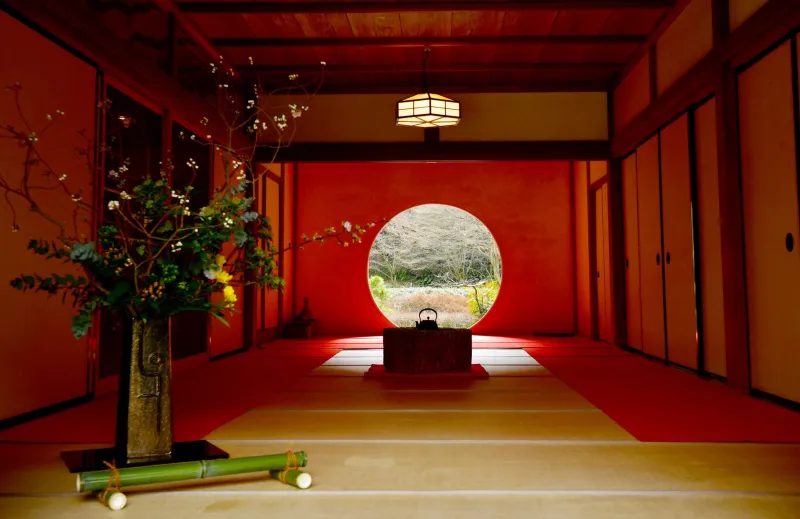
There is a moment — familiar to anyone who has sat in a Japanese garden — when the absence of something becomes more present than anything surrounding it. The raked gravel between stones. The pause between a shakuhachi's notes. The unmarked wall beside a single hanging scroll. These are not accidents of restraint. They are the deliberate architecture of ma (間) — a Japanese concept that translates imperfectly as "negative space" or "interval," but means something far more dynamic: the charged emptiness that gives form its meaning.
For centuries, ma has been central to Japanese aesthetics, informing the spatial logic of Noh theater, the compositional silences of traditional music, and the structural philosophy of architecture. Now, in an unlikely setting — the product studios and UX labs of San Francisco, Austin, and New York — this ancient sensibility is finding new practitioners. And the results are beginning to change how Americans think about what a well-designed experience actually feels like.
When Too Much Became the Problem
The American digital landscape of the 2010s was, by nearly any measure, an exercise in maximalism. Notification badges competed for attention. Homescreens became cluttered dashboards. Social platforms rewarded volume over depth, and the prevailing UX doctrine held that more features meant more value. Users, it was assumed, wanted everything — and they wanted it immediately.
The backlash, when it came, was not dramatic. It arrived quietly, in the form of users reporting anxiety, fatigue, and a creeping sense that their devices were working against them. Mental wellness conversations began bleeding into product strategy meetings. Designers started asking a question that would have seemed counterintuitive a decade earlier: what if the most powerful thing we could build was something that did less?
For a subset of those designers, the search for an answer led east.
The Interval as Interface
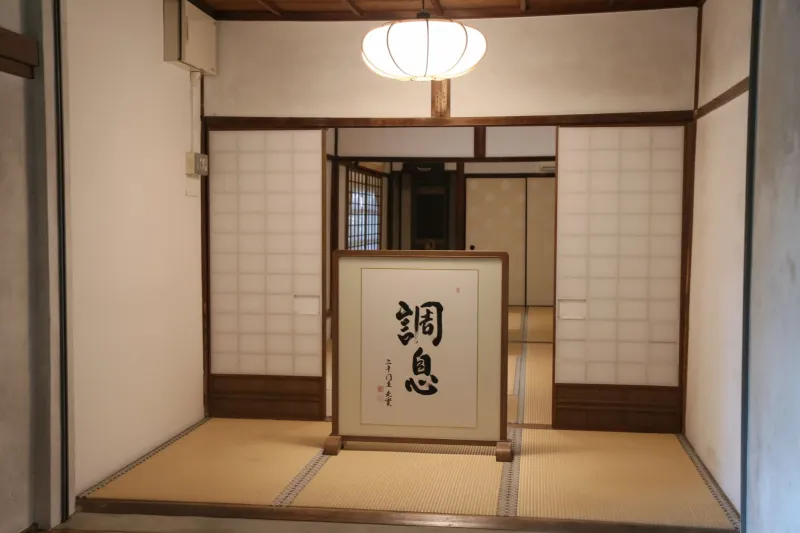
In Japanese spatial philosophy, ma does not describe a void. It describes a relationship — the dynamic tension between presence and absence that makes both meaningful. A doorway is ma. The breath before a musician plays is ma. The white space surrounding a single piece of calligraphy is ma. Remove it, and the remaining elements collapse into noise.
Applied to digital product design, this principle translates into deliberate restraint: interfaces with generous white space, interactions that do not rush the user toward the next engagement, notifications that are withheld rather than broadcast. Several design teams working in consumer technology have begun explicitly studying Japanese spatial arts — from the proportional logic of tokonoma alcoves to the compositional discipline of ink-wash painting — as a framework for rethinking interface architecture.
The philosophical shift is significant. Western minimalism, as it has typically been practiced in design, is primarily an aesthetic posture — the removal of ornamentation for visual clarity. Ma, by contrast, is a relational concept. The space is not empty; it is listening. It creates room for the user to arrive, to settle, to engage on their own terms. The distinction matters because it changes the intention behind the design decision.
Designing for Pause
Interior designers working in the residential and hospitality sectors are encountering the same reorientation. In cities including Los Angeles, Chicago, and Seattle, a growing number of architects and interior consultants are drawing on Japanese spatial principles — wabi-sabi's embrace of imperfection, ma's structuring of emptiness — to create environments that feel genuinely restorative rather than merely stylish.
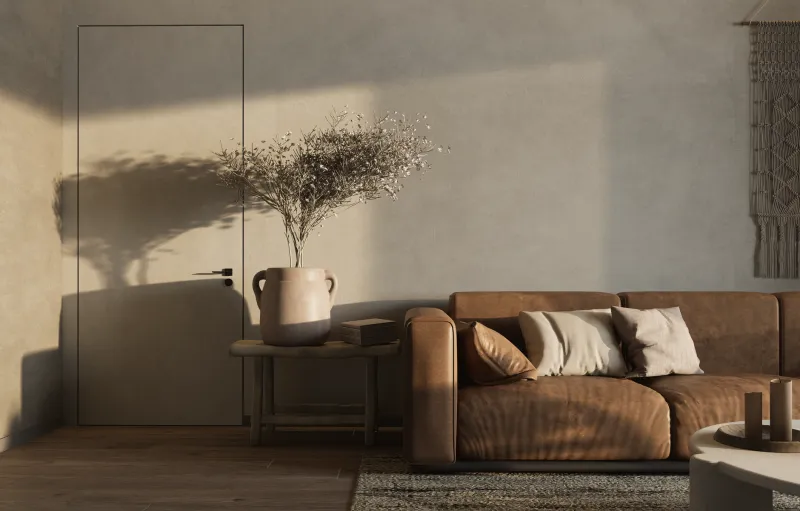
The practical applications are varied. A living room designed with ma in mind might feature one carefully chosen object on an otherwise bare surface, with the surrounding space treated not as waste but as visual breath. A hospitality space might eliminate ambient music for designated hours, allowing silence to function as an amenity. In each case, the underlying logic is the same: meaningful experience requires room to unfold.
For American consumers accustomed to environments engineered for maximum stimulation, these spaces can feel disorienting at first — and then, often, profoundly calming.
The Wellness Dimension
It would be a mistake to treat this design shift as purely aesthetic. The growing interest in ma among American practitioners connects directly to a broader cultural conversation about cognitive overload, digital wellness, and the psychological cost of environments optimized for engagement rather than wellbeing.
Research on attention and restorative environments has long suggested that spaces and experiences characterized by low stimulation and open structure support psychological recovery in ways that dense, information-rich environments cannot. The Japanese arts tradition arrived at a version of this understanding through centuries of contemplative practice rather than clinical study — but the convergence is striking.
For designers who have come to ma through an interest in Japanese aesthetics, the wellness implications are often part of what makes the philosophy compelling. To design with ma is to acknowledge that the user is not a machine to be optimized but a person who needs room to breathe.
A Discipline, Not a Trend
Perhaps the most important thing to understand about ma — and the thing most easily lost in translation — is that it is not a technique. It is a discipline, one that requires the practitioner to resist the instinct to fill, to add, to complete. In a professional context shaped by metrics that reward engagement and feature velocity, that resistance is genuinely difficult to sustain.
The designers and architects who are most seriously engaging with ma tend to describe it not as a design philosophy they have adopted but as a practice they are learning — something closer to a martial or meditative discipline than a stylistic choice. The parallel to the do traditions of Japanese culture is not incidental. Like the archer who must learn to release without grasping, the designer working with ma must learn to trust the power of what is not there.
In this sense, the voice of the way — michi no koe — is sometimes silence itself. And in that silence, something essential becomes audible.