Nameless by Discipline: What Japanese Craft Anonymity Reveals About America's Personal Branding Obsession
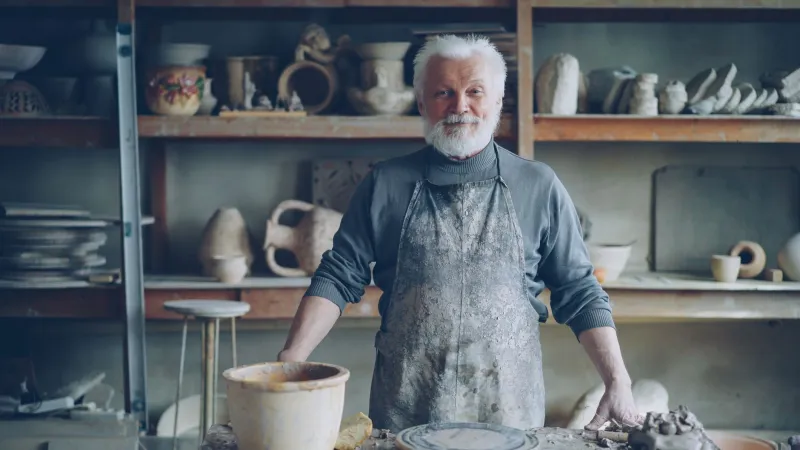
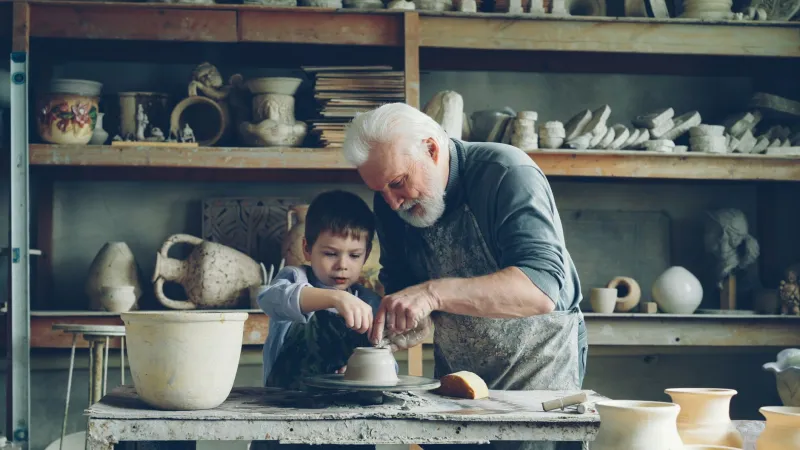
Somewhere in a ceramics studio in Mino, an apprentice is shaping clay that will never bear his name. He has been doing this for six years. His hands know the material's resistance, its willingness, its betrayal under careless heat. And yet, when those vessels leave the kiln and find their way to collectors, the name stamped beneath them belongs to his master. His contribution is absorbed, invisible, total.
This is not exploitation. This is shokunin culture at its most demanding and, paradoxically, its most generous.
For Americans steeped in the gospel of self-promotion—where LinkedIn profiles urge early-career professionals to "own their narrative" and entrepreneurship coaches insist that personal branding begins before the first product ships—the Japanese tradition of craft anonymity reads as almost incomprehensible. Yet it persists, deliberately and with great purpose, across disciplines ranging from lacquerwork and blade-smithing to woodblock printing and architectural joinery. Understanding why it persists may be among the more uncomfortable cultural lessons available to American professionals right now.
The Architecture of Namelessness
The apprenticeship system that governs traditional Japanese crafts does not simply delay recognition—it reframes the entire meaning of recognition. In the context of sword-making, for instance, a young kajishi (blade-smith apprentice) may spend the first several years of training performing tasks that have nothing to do with metal: maintaining the fire, cleaning the workshop, observing the master's movements without asking questions. The logic is not punitive. It is structural.
Mastery, within this framework, is understood as something that cannot be assembled from techniques alone. It accumulates through proximity, repetition, and the gradual absorption of principles that have no names—principles that live in the body before they can be articulated by the mind. The apprentice who rushes toward attribution before this absorption is complete produces work that is technically sound but spiritually hollow. The Japanese have a word for this hollowness: katachi dake, form without essence.
When a woodworker in the miyadaiku tradition—the discipline dedicated to temple and shrine carpentry—finally earns the right to sign his work, often after fifteen or twenty years under a master, that signature carries a weight that no amount of early self-promotion could manufacture. The name does not announce the craftsperson. It confirms a transformation.
What Silicon Valley Got Wrong About Identity
The contrast with contemporary American professional culture is not merely stylistic—it is philosophical. The past two decades have produced an entire industry built around the premise that visibility precedes credibility, that the brand must be constructed before the substance is fully developed. Podcasts, social media strategies, and business school curricula all operate on a shared assumption: that waiting to be known is a form of professional negligence.
This framework has produced genuinely remarkable results in certain domains—particularly in technology, where network effects reward early presence and iteration happens at a pace that traditional craft timelines cannot match. But it has also produced a generation of professionals whose identities outpace their competencies, whose confidence in their own narratives has not been tempered by the kind of sustained, anonymous labor that builds true depth.
The startup world's mantra of "fail fast, learn fast" is not inherently wrong. But it assumes that learning is primarily cognitive—that it can be extracted from failure and reapplied in the next iteration. The Japanese craft tradition suggests that certain forms of learning are not cognitive at all. They are somatic, relational, and cumulative in ways that cannot be accelerated without loss.
The Paradox of Delayed Recognition
There is a counterintuitive argument to be made here, one that several American craftspeople who have trained in Japan have articulated with some frustration: anonymity, properly understood, is not self-erasure. It is self-construction by other means.
When the apprentice potter cannot sign her work, she is freed from the anxiety of reception. She is not making pieces for an audience; she is making pieces for the process. The clay does not care about her personal brand. The kiln does not reward her narrative. What remains, stripped of all performative incentive, is the relationship between the maker and the material—and it is precisely this relationship that produces the quality of attention that distinguishes extraordinary craft from competent craft.
American ceramicist Dana Whittaker, who spent three years in a Kyoto workshop before returning to establish her own studio in Portland, Oregon, describes the experience as "a kind of deprogramming." She recalls the first months as disorienting—not because the work was difficult, but because the absence of feedback loops she had always relied on felt like deprivation. "I kept wanting to photograph things, to share progress, to get responses," she says. "And gradually I realized that impulse was actually getting in the way of seeing what was in front of me."
What she describes is not unique. Practitioners across disciplines—from lacquerwork to textile dyeing—report a similar recalibration: the withdrawal of external validation does not diminish motivation. It clarifies it.
The Name as Covenant
In traditional Japanese craft culture, the moment an artisan earns the right to sign their work is not simply a professional milestone. It is closer to a covenant—a formal acknowledgment that the individual has internalized a lineage, that the name they place on an object carries not just their own identity but the accumulated knowledge of everyone who taught them.
This is why the names themselves are often passed down. A master lacquer artist may bestow their working name upon a chosen apprentice, who then carries it forward into their own decades of practice. The name is less a personal brand than a living archive. It belongs to the work as much as to the worker.
This concept has no direct equivalent in American professional culture, where personal branding is explicitly about differentiation—about standing out from predecessors, not extending their legacy. The Japanese model inverts this entirely: the highest honor is to become so thoroughly continuous with a tradition that the individual signature becomes an expression of something larger than individual achievement.
What American Craftspeople Are Learning
A quiet counter-movement is emerging in American artisan communities—particularly among younger makers who have grown exhausted by the performance demands of social media visibility. In ceramics studios from Asheville to Santa Fe, in woodworking shops from Vermont to the Pacific Northwest, a growing number of practitioners are deliberately extending their apprenticeships, resisting the pressure to launch brands before their skills have fully matured.
Some are explicitly drawing on Japanese frameworks. Others have arrived at similar conclusions through their own experience of the gap between early visibility and genuine competence. What unites them is a shared recognition that the name, when it finally arrives, means more for having been withheld.
The path of the shokunin is not for everyone, and it would be naive to suggest that Japanese craft apprenticeship models can be transplanted wholesale into an American economic context. But the underlying principle—that identity deepens through patient, anonymous labor before it earns the right to announce itself—offers something genuinely corrective to a culture that has confused early attribution with early mastery.
The unsigned vessel on the shelf in Mino is not waiting to be claimed. It is waiting to be understood.