Before the Next Effort: What Japanese Wisdom About Rest Reveals About America's Exhaustion Problem
Somewhere between the fourth cup of coffee and the midnight email refresh, something breaks. American professionals know this fracture point well—the moment when relentless forward motion stops producing results and starts consuming the person doing the moving. Burnout, once a fringe clinical term, has become so commonplace that it functions almost as a badge of cultural belonging. To be exhausted is, in certain circles, to be serious.
Yet across the Pacific, a fundamentally different architecture of human energy has persisted for centuries—one that does not merely tolerate rest, but regards it as a discipline worthy of the same intentionality applied to work itself. The Japanese philosophical traditions surrounding pause, space, and renewal offer something American culture has quietly been searching for: a framework in which stopping is not surrender, but strategy.
The Sumo Stable and the Art of Necessary Stillness
Few athletic traditions appear as physically demanding as sumo wrestling. The training regimens inside Japan's heya—the residential stables where wrestlers live, eat, and practice together—are notoriously rigorous. And yet embedded within those regimens is a practice that would strike many Western performance coaches as counterintuitive: the ritualized afternoon nap.
Following the morning's intense keiko practice and the communal meal that follows it, wrestlers are expected to sleep. This is not a concession to fatigue. It is a scheduled event, understood by coaches and athletes alike as a component of physical development rather than a suspension of it. The body, having been pushed to its limits, is given structured time to consolidate the work done upon it.
This is the essence of nemuri as a wellness principle—not sleep as collapse, but sleep as completion. The rest finishes what the effort begins.
For American athletes and executives increasingly drawn to Japanese training philosophies, this reframing carries significant weight. The question is no longer whether one can afford to rest, but whether one can afford not to.
Yutori: The Spaciousness That Allows Depth
In contemporary Japanese educational and workplace discourse, the term yutori carries layered meaning. Broadly translatable as "spaciousness" or "leeway," it describes a quality of schedule and mind that resists over-compression. When a calendar has yutori, there is room between appointments—not wasted room, but breathing room. Room in which the mind can consolidate, the spirit can settle, and genuine attention can be brought to what comes next.
The concept emerged prominently in Japanese education reform debates of the 1980s and 1990s, where it described a pedagogical philosophy that prioritized depth of learning over volume of content. Students given yutori in their schedules, the argument went, did not learn less—they learned more durably.
American companies experimenting with four-day workweeks, mandatory vacation policies, and "focus time" calendar blocks are, often without knowing it, implementing something philosophically adjacent to yutori. Organizations like Basecamp and Buffer have published internal data suggesting that reduced hours correlate with increased output quality rather than decreased quantity. The mechanism, though rarely named in these corporate announcements, mirrors what Japanese educational philosophers described decades ago: constraint creates conditions for concentration.
What yutori adds to this conversation is a moral dimension absent from productivity-optimization framing. Spaciousness is not merely useful. It is, in the Japanese cultural context, a mark of civilized living—evidence that a person or institution has not allowed urgency to colonize every available hour.
Zen's Contribution: Rest as Rigorous Practice
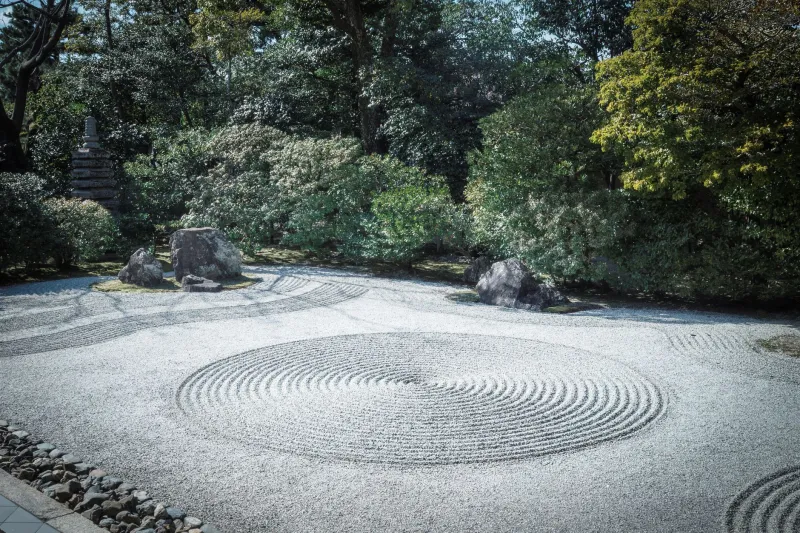
The Zen monastic tradition offers perhaps the most philosophically sophisticated treatment of rest in Japanese culture. Within the daily schedule of a Rinzai or Soto monastery, periods of formal sitting meditation (zazen) alternate with periods of walking meditation (kinhin), communal work (samu), and structured silence. What an outside observer might categorize as "active" and "restful" periods are, within the tradition, understood as continuous expressions of the same practice.
This is the concept sometimes described in English as "working rest" or, more precisely in Japanese, hataraki-yasumi—a mode of engagement in which the boundaries between effort and recovery dissolve. A monk sweeping the stone courtyard is not resting from meditation. He is meditating through the sweep.
For Americans navigating burnout, this concept challenges the binary that underlies much of the problem: the idea that time must be categorized as either productive or wasted. Hataraki-yasumi proposes a third category—time that restores precisely because it is engaged, present, and purposeful, even when it produces nothing measurable.
This is why a walk without a podcast, a meal eaten without a screen, or a commute spent watching the landscape rather than processing a backlog can function as genuine recovery. Not because they are passive, but because they are undivided.
What Forward-Thinking Americans Are Beginning to Understand
The adoption of Japanese wellness philosophy in American professional contexts has accelerated noticeably in the years following the pandemic, as mass resignations and widespread burnout made the costs of the old model impossible to ignore. Corporate wellness programs in cities like San Francisco, New York, and Austin have begun incorporating concepts drawn from Japanese practice—though the translation is not always precise.
Mindfulness programming, for instance, often captures the form of Zen practice while missing its philosophical foundation. Nap pods in tech offices approximate nemuri without the surrounding culture of intentional recovery. Flexible scheduling gestures toward yutori without fully committing to its premise that spaciousness is a value, not merely a perk.
The deeper shift—the one that Japanese tradition actually models—requires something more fundamental than policy change. It requires a renegotiation of what rest means. Not the absence of work, but a different quality of presence. Not laziness, but the discipline of allowing recovery to be as deliberate as effort.
The Voice of the Way on This Matter
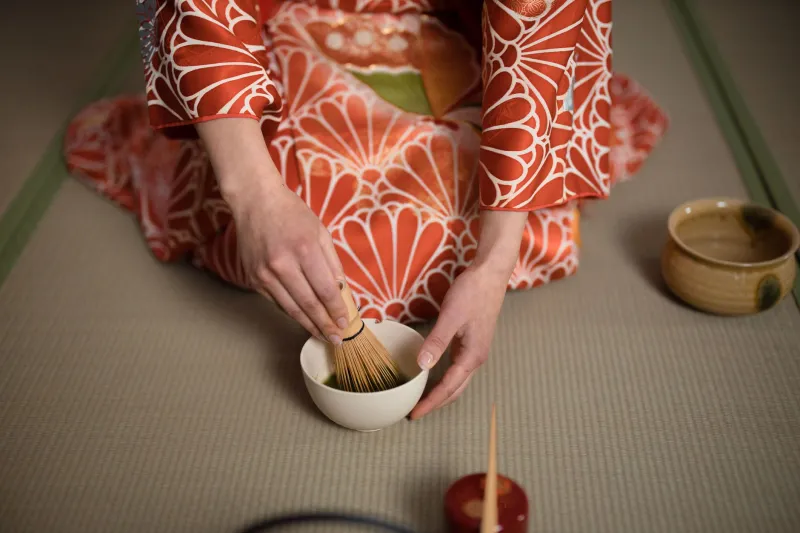
The name of this publication, 道の声—Michi no Koe, the Voice of the Way—draws from the Japanese concept of michi, a path walked with full attention over time. The do traditions of Japan, from judo to kado (the way of flowers) to chado (the way of tea), share a common understanding: mastery is not a destination but a sustained relationship between effort and its renewal.
The practitioner who never rests does not walk the way more quickly. She walks it more shallowly, and often not for long.
America's burnout crisis is, at its root, a crisis of philosophy—a failure to understand that the human capacity for excellent work is not a resource to be depleted but a rhythm to be tended. Japanese wisdom does not resolve this crisis with a simple prescription. It offers something more valuable: a different way of seeing what rest is for.
Before the next effort, there is always a before. How one inhabits that interval may determine everything about what follows.