When Silence Becomes Sound: The Ancient Japanese Art of Deep Listening and Its Place in American Wellness
There is a particular quality to the silence that follows the strike of a temple bell in Japan. It does not simply fade. It dissolves—slowly, deliberately—into the air, as though the sound itself is teaching you how to let go. For centuries, Japanese aestheticians, monks, and musicians have understood something that Western wellness culture is only beginning to articulate: that sound, received with full attention, is a form of medicine.
Across the United States, practitioners and seekers alike are discovering this principle through the emerging intersection of Japanese sound philosophy and contemporary wellness. What began as scattered offerings in urban yoga studios and integrative health centers has grown into a recognizable movement—one that draws, consciously or not, on the deep cultural roots of onkyodo, the Japanese way of sound.
What Is Onkyodo?
Unlike the more widely recognized Japanese arts of kado (the way of flowers) or chado (the way of tea), onkyodo occupies a quieter place in Western awareness. The term refers not merely to the production of sound but to a comprehensive philosophical orientation toward sonic experience—one that encompasses how sound is generated, how it travels through space, how it is received by the body, and what it leaves behind in the listener's consciousness.
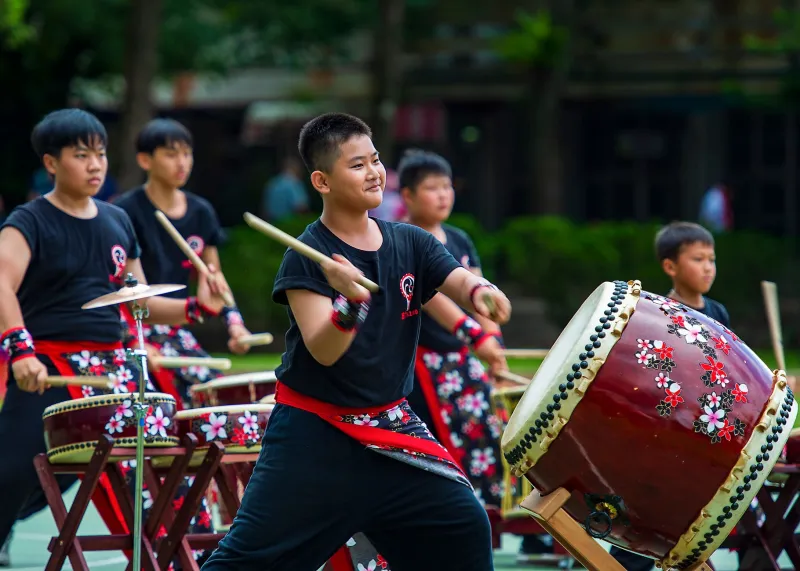
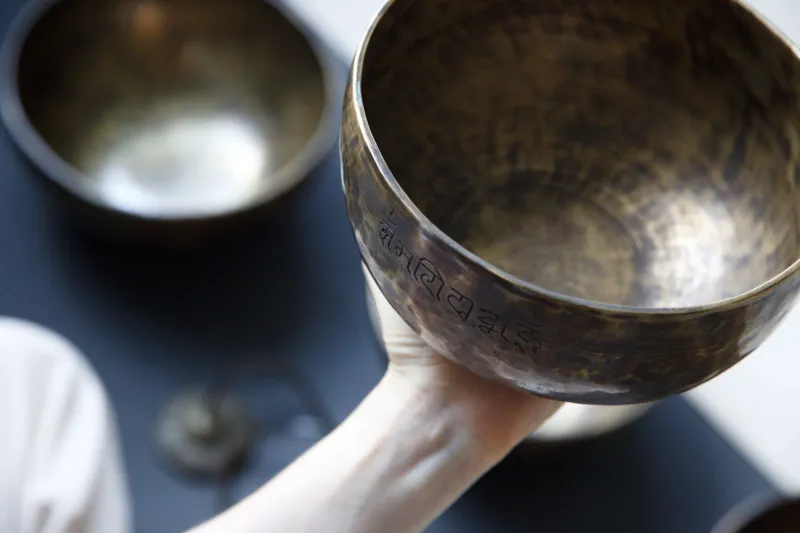
The tradition draws from multiple streams: the resonant chanting of Buddhist liturgy, the precise acoustic design of Noh theater, the meditative plucking of the shakuhachi flute, and the ceremonial use of rin bowls and taiko drums in ritual contexts. What unites these diverse practices is a shared conviction that sound is not merely entertainment or communication. It is a vehicle for awareness.
In classical Japanese aesthetics, this connects directly to the concept of ma—the meaningful pause, the charged interval between notes. A practitioner of onkyodo does not simply listen to what is present. They attend equally to what is absent. The silence between strikes of a rin bowl is not nothing. It is, in many respects, the whole point.
The American Discovery
In cities from Portland to Philadelphia, a new generation of wellness practitioners is introducing clients to sound immersion experiences that draw—sometimes explicitly, sometimes intuitively—from these Japanese principles. Sound bathing, as it is broadly known in the American market, typically involves participants lying in a reclined position while a practitioner plays sustained tones on instruments such as crystal bowls, gongs, or tuning forks.
But a growing number of practitioners are distinguishing their approach by incorporating specifically Japanese sonic elements: the warm, breathy overtones of the shakuhachi, the meditative drone of shomyo (Buddhist chant), or the precise, bell-like decay of bronze rin bowls. The effect, practitioners report, is qualitatively different from generic sound bath experiences.
"There's a specificity to the Japanese sonic tradition that I haven't found elsewhere," says one sound practitioner based in the San Francisco Bay Area who spent several years studying in Kyoto. "It's not about filling space with vibration. It's about creating conditions in which the listener becomes aware of their own listening. That shift—from passive hearing to active receiving—is where the therapeutic value lives."
Neurological researchers have begun to take notice. Studies examining the physiological effects of sustained tonal immersion suggest measurable reductions in cortisol levels, decreased activity in the brain's default mode network, and improvements in self-reported anxiety. While the research remains early-stage, it aligns with what practitioners of onkyodo have described for generations in non-clinical language: that intentional sound slows the mind's compulsive narration and returns the listener to the present moment.
A Counterweight to Algorithmic Audio
The timing of this interest is not coincidental. Americans now live inside a near-constant sonic environment shaped by algorithmic curation—streaming platforms, podcast queues, background playlists calibrated for productivity or mood management. Sound, in contemporary digital life, has become a utility: something consumed rather than received.
The Japanese tradition offers a fundamental challenge to this orientation. In onkyodo, the listener does not consume sound. They enter into relationship with it. This distinction, seemingly subtle, carries significant practical implications for how practitioners approach a session and how participants are prepared to receive it.
In many American studios now offering Japanese-influenced sound immersion, participants are guided through a brief period of mokuso—the meditative stillness familiar from martial arts practice—before the session begins. This preparatory silence serves not as an absence of the experience but as its threshold. It reorients the nervous system from the consuming mode of daily life to the receptive mode required for genuine deep listening.
"Most people arrive carrying hours of audio residue," notes a practitioner in New York who trained in both Western music therapy and Japanese traditional arts. "Podcasts, notifications, ambient noise. The first thing we do is help them notice that they're still listening to all of it internally. The session doesn't begin until that layer starts to quiet."
The Shakuhachi as Therapeutic Instrument
Among the Japanese instruments finding new audiences in American wellness contexts, the shakuhachi occupies a particularly prominent place. The end-blown bamboo flute, traditionally associated with the Zen Buddhist sect of Fuke monks, was historically used as a tool for meditation rather than performance. Its breathy, imprecise tonal quality—so different from the clean pitch of Western flutes—was considered a feature rather than a flaw. The slight instability in the sound mirrors the impermanence at the heart of Buddhist philosophy.
American students of the instrument often report that learning the shakuhachi is less about acquiring technical proficiency and more about developing a different relationship with imperfection and effort. The instrument resists mastery in ways that feel deliberately instructive. Many practitioners who have incorporated it into wellness offerings describe it as uniquely suited to therapeutic contexts precisely because its tonal character does not permit the kind of polished, finished quality that invites passive consumption.
"You cannot put a shakuhachi recording on in the background and ignore it," one instructor observes. "Something in the sound demands that you stay present with it. That's not a limitation. That's the teaching."
Listening as Discipline
Perhaps the most significant contribution of the Japanese sound tradition to American wellness is not any particular instrument or technique but a reconceptualization of listening itself as a practice requiring cultivation. In a culture that prizes expression, production, and output, the idea that receiving might demand equal discipline is quietly radical.
The path of onkyodo suggests that how we listen shapes what we are capable of perceiving—not only in sound, but in all domains of experience. The practitioner who has learned to attend to the full decay of a rin bowl strike, following the sound into silence without distraction, has trained a quality of attention that carries beyond the studio.
For Americans navigating a landscape of relentless stimulation, this may be the most useful inheritance of the Japanese sonic tradition: not a new wellness product, but an ancient invitation to stop performing and begin, at last, to truly hear.
道の声 — The voice of the way speaks, if we learn to listen.