Ink Without Mercy: The American Professionals Learning to Live With Their First Stroke
Photo: Asanagi, CC0, via Wikimedia Commons
There is a moment in every beginner's first calligraphy class that the instructor does not warn you about. It comes roughly three seconds after the brush touches the paper. A student in a Tuesday-night workshop in Somerville, Massachusetts — a product manager in her thirties, the kind of person who has revised a Slack message eleven times before sending — freezes mid-character. Her hand hovers. She looks up, half-smiling, and asks the question every shodō teacher in America has heard a hundred times:
"Can I fix that?"
No. She cannot. The ink is down. The character, whatever it has become, now exists.
The Tyranny of the Draft
Consider how rarely an American adult makes a permanent mark on anything. We write in Google Docs with version history stretching back years. We retake photos, filter them, delete them. We send emails, then recall them. We edit our own texts before sending, edit our captions, edit our selves. The digital environment we inhabit is engineered around one promise: nothing you do has to be final.
Psychologists have begun naming the cost of this promise. Decision paralysis, revision loops, the low-grade anxiety of the perpetually unsubmitted — these are not quirks of personality but predictable responses to a world of infinite reversibility. When everything can be undone, nothing ever feels done.
Shodō, the Japanese discipline of brush calligraphy, operates on the opposite premise. The word itself means "the way of writing," and like every Japanese dō — every "way" — it is less about the product than the transformation of the person practicing. But its most radical feature, for a American audience, is embarrassingly simple: the paper does not negotiate.
Sumi ink, ground from a solid stick against a stone, bonds with washi paper as it dries. There is no white-out in this tradition. There is no layer. A stroke that wavers is a stroke that wavers, permanently, and the character must be completed anyway.
Exposure Therapy for Perfectionists
Ask workshop instructors in Portland, Chicago, and Brooklyn why enrollment keeps climbing, and the answers converge with striking speed. "People don't come to learn beautiful writing," says one teacher who leads sessions out of a converted warehouse in Southeast Portland. "They come because something in their life is stuck. And then they discover the practice is basically exposure therapy for perfectionism."
The clinical framing is not a stretch. Exposure-based therapies work by gradually confronting a person with the thing they fear, in tolerable doses, until the fear loses its grip. For the chronically editable, the feared object is finality itself. A shodō session delivers it in small, survivable units: one breath, one stroke, one commitment. Then another. Students describe a physical sensation — a loosening in the shoulders, a drop in the jaw — as the body learns that a permanent mistake is survivable.
Several students interviewed for this article used nearly identical language. A hospice nurse from Austin said the practice "gave me back my first draft of being a person." A software engineer described his weekly class as "the only ninety minutes where I can't cmd-Z my way out of being present."
The Ethics of the Unrepeatable
It would be easy to file shodō under mindfulness and move on. But the tradition carries a deeper claim, one that predates American wellness culture by centuries: that a mark made with full commitment has a dignity no revised mark can possess.
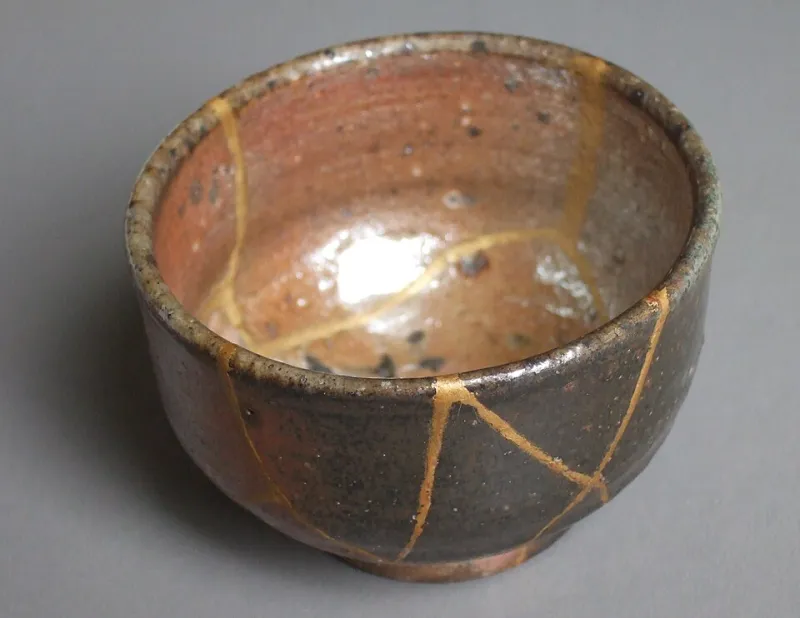
Classical Japanese aesthetics holds a special regard for the work that cannot be redone. A tea bowl with a slight asymmetry is not a failed bowl. A character whose final stroke trembles is not a failed character — it is an honest record of a single, unrepeatable moment by a single, unrepeatable hand. The Japanese phrase ichigo ichie, usually translated as "one time, one meeting," captures the underlying ethic: this moment will never occur again, so meet it completely.
American culture, by contrast, has quietly pathologized the unedited. We apologize for rough drafts. We disclaim our emails. We live so far downstream from our own first impulses that we sometimes lose access to them entirely.
What the Brush Actually Teaches
None of this means shodō instructors are producing careless writers. Quite the opposite: because revision is impossible, the discipline relocates all of its rigor to the moment before the stroke. Posture, breath, the grinding of the ink, the settling of the mind — decades of preparation exist so that a single gesture can be made with the whole person behind it. The practice does not eliminate the desire to redo. It redirects that desire backward in time, into attention.
This may be the most transferable lesson for American students. You cannot live without an undo button by becoming careless. You live without one by becoming present — by concentrating everything you have into the moment where the mark is actually made, because that is the only moment you will ever control.
The Somerville product manager, six months into her practice, put it plainly. "I still edit everything at work," she said. "But I've stopped editing myself before I act. The brush taught me that hesitation has a cost too. It's just a cost you pay in silence."
The ink dries in seconds. The character remains. And somewhere in that permanence — terrifying at first, then unexpectedly merciful — a generation raised on do-overs is learning what it feels like to mean something the first time.