Walking Toward Wholeness: How Ancient Japanese Pilgrimage Routes Are Calling Burned-Out Americans Home to Themselves
There is a particular kind of exhaustion that Americans have grown fluent in describing — the hollow fatigue that settles not in the muscles but somewhere behind the eyes, in the chest, in the part of a person that once knew why they were working so hard in the first place. Clinicians call it burnout. Philosophers might call it a crisis of meaning. In Japan, there has long existed a remedy that requires no prescription and no appointment: you simply begin to walk.
The pilgrimage routes of Japan — most famously the Kumano Kodō in the Kii Peninsula and the Shikoku Henro, an 88-temple circuit spanning over 750 miles — are among the oldest continuously traveled spiritual paths on earth. For centuries, Japanese pilgrims have walked these trails not merely to arrive somewhere, but to undergo something. The distinction matters enormously. And increasingly, it matters to Americans.
The Concept That Changes Everything
At the heart of Japanese pilgrimage culture lies a word this publication takes as its very namesake: michi (道). Translated most simply as "way" or "path," michi carries within it layers of meaning that resist easy reduction. It is the road beneath your feet, yes — but it is equally the discipline you dedicate your life to, the invisible current that connects effort to understanding, the passage between who you were and who you are becoming.
In martial arts, one speaks of kendō, judō, aikidō — each discipline a michi, a way of being shaped through practice. The pilgrimage routes of Japan extend this logic outward into the landscape itself. The path becomes the teacher. The walking becomes the curriculum.
For Americans steeped in a culture that prizes destination over transit, outcome over process, this reorientation can feel almost disorienting at first — and then, for many, profoundly liberating.
Arriving in Japan With Nothing Left to Give
Meredith Calloway, a 41-year-old former marketing director from Portland, Oregon, arrived at the trailhead of the Kumano Kodō in the autumn of 2022 carrying, by her own account, very little except exhaustion and a new pair of hiking boots. She had taken a leave of absence from her position following what she describes as a "slow-motion collapse" — not a dramatic breakdown, but a gradual draining away of engagement, creativity, and care.
"I had read about the Kumano Kodō in a travel piece," she recalls. "What stayed with me wasn't the scenery, as beautiful as that sounded. It was a line about how the path had been walked by emperors and commoners for over a thousand years. There was something about that continuity that felt like an antidote to how disposable everything in my life had started to feel."
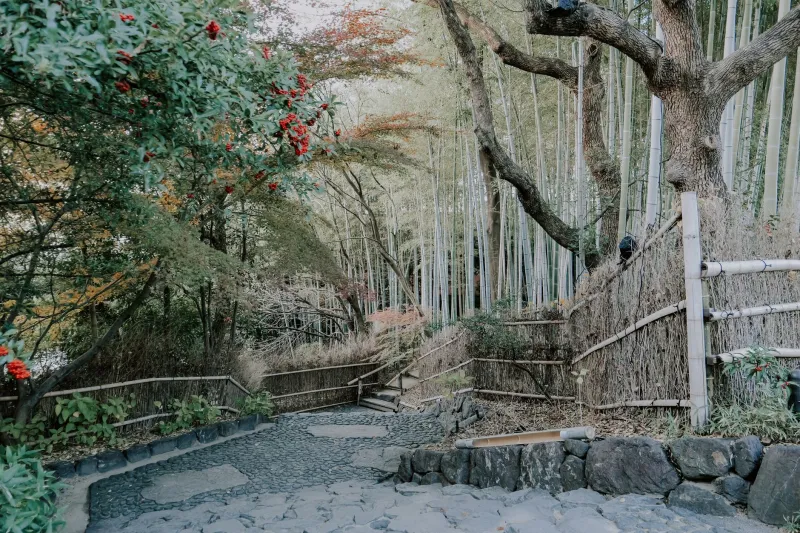
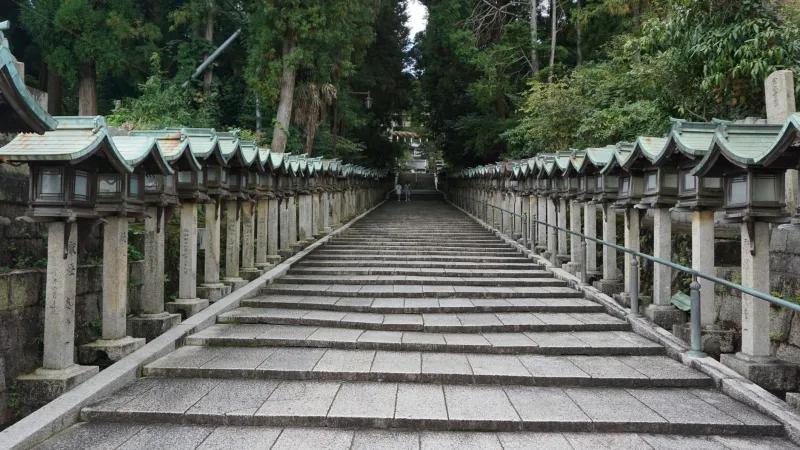
The Kumano Kodō, a UNESCO World Heritage site, winds through ancient cedar forests, past moss-covered stone lanterns, and alongside rivers that have carved their way through the Kii mountains for millennia. Pilgrims traditionally walk toward one of three grand shrines — the Kumano Nachi Taisha, Kumano Hayatama Taisha, or Kumano Hongu Taisha — though the sacred quality of the journey is understood to reside in the walking itself, not merely the arrival.
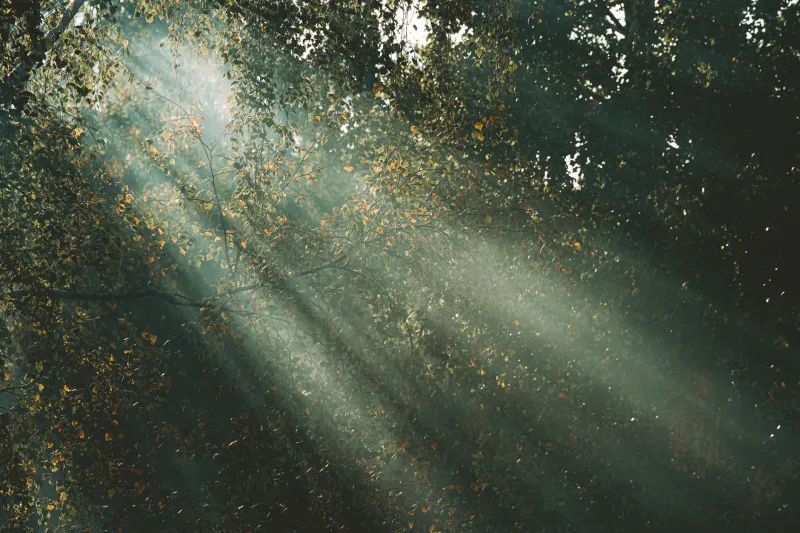
Calloway completed a five-day section of the route. She speaks of the experience with a measured reverence. "By the third day, something shifted. I stopped thinking about what I should be doing with my life and started noticing what was directly in front of me — the texture of a stone step, the sound of water, the way the light moved through the canopy. It sounds small. It wasn't."
The Shikoku Circuit: Discipline as Devotion
If the Kumano Kodō offers immersion in ancient forest and imperial history, the Shikoku Henro presents something more demanding still: a walking circuit of the entire island of Shikoku, visiting 88 temples associated with the Buddhist monk Kūkai, known posthumously as Kōbō Daishi. Traditionally completed on foot over 30 to 60 days, the route asks something considerable of those who undertake it.
Pilgrims on the Shikoku circuit are called o-henro-san and are traditionally dressed in white — a color associated in Japanese culture with both purity and death. The white garments are understood to signal the pilgrim's readiness to die to their former self. This is not metaphor deployed lightly. It is instruction.
Daniel Okafor, a 38-year-old therapist from Chicago, completed the full Shikoku circuit in 2023 after a period he describes as professional and personal fragmentation. He had been treating trauma in others for years while neglecting, he acknowledges, his own accumulating weight.
"There's a phrase used on the Shikoku route," Okafor explains. "Dōgyō ninin — walking together, the two of us. The idea is that Kōbō Daishi walks beside every pilgrim. Whether or not you hold a religious framework for that, what it gave me was the felt sense that I was not entirely alone in what I was carrying. That was not nothing. That was, in fact, everything."
Adapting the Ancient for the Contemporary Seeker
Not every American drawn to Japanese pilgrimage culture is prepared — financially, physically, or logistically — to travel to Japan. This reality has prompted thoughtful adaptation. Wellness practitioners, Japanese cultural organizations, and contemplative retreat centers across the United States have begun developing what some call "michi-informed" walking practices: structured walks that incorporate the intentionality, silence, and philosophical framing of traditional Japanese pilgrimage without requiring transcontinental travel.
Several retreat centers in California and Vermont now offer multi-day silent walks modeled loosely on pilgrimage principles, incorporating periods of formal reflection, communal meals prepared with care, and the deliberate slowing of pace that distinguishes pilgrimage from hiking. The emphasis, practitioners are careful to note, is not on cultural appropriation but on genuine engagement with the underlying philosophy — the understanding that a path walked with awareness becomes something qualitatively different from a path merely traversed.
What the Path Asks of Us
There is a quality of honesty that long walking demands. Without the insulation of screens, schedules, and social performance, the walker is left with the self — its fears, its hungers, its surprising capacity for stillness. Japanese pilgrimage culture has always understood this. The route does not promise comfort. It promises encounter.
For Americans accustomed to optimizing every experience for maximum return, this can represent a genuinely countercultural proposition. The michi does not care about your productivity metrics. It asks only that you continue, step by step, with whatever presence you can muster.
Meredith Calloway returned to Portland and, eventually, to work — though not to the same position or the same pace. She speaks of the Kumano Kodō not as a cure but as a recalibration. "I learned that I could be in something without needing to finish it efficiently," she says. "That sounds like such a small thing. But for me, it was the beginning of a completely different relationship with my own life."
The path, it seems, has a way of teaching exactly what it knows we need — provided we are willing, at last, to slow down enough to receive it.