Before the Silence: Five Vanishing Sounds of Japan That America Is Learning to Hear
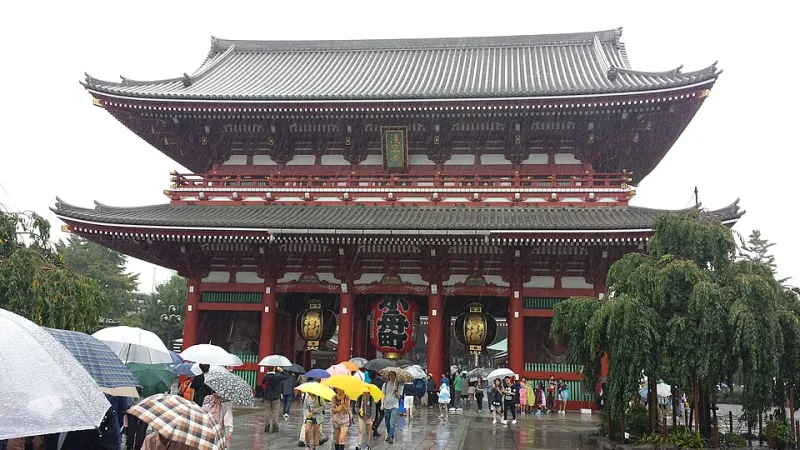
Photo: Rickard Törnblad, CC BY-SA 4.0, via Wikimedia Commons
We preserve buildings. We preserve manuscripts, costumes, tools. But sound — the most ephemeral of all cultural materials — almost never makes the heritage list. A temple can be rebuilt. The particular acoustic texture of a rain chain at two in the morning, heard from the corridor of a mountain monastery, cannot.
Japan, a country that has formalized nearly everything else about daily life, has never fully institutionalized the preservation of its soundscapes. Which is why a loose international network of field recordists, archivists, and — improbably — millions of American listeners scrolling ASMR playlists at midnight have become the de facto conservators of a sonic heritage that is slipping away one decibel at a time.
What follows is a listening tour of five Japanese sounds in retreat, and the unlikely rescue effort underway.
1. Geta on Stone
The sound is unmistakable once heard: a hollow, wooden double-click — koro-koro, as the onomatopoeia goes — of traditional geta sandals striking a paved path. For centuries it was the ambient rhythm of shrine approaches and temple towns like Kyoto's Higashiyama district. Today, tourists in rental kimono more often wear cushioned sandals for comfort, and the click is thinning out of the soundscape.
Field recordings of geta on stone, uploaded by Japanese recordists and clipped into viral videos, have accumulated millions of views from American audiences who describe the sound as "instantly calming" — a phenomenon acoustic ecologists attribute to its irregular, unhurried rhythm, closer to footsteps on gravel than to any mechanical pulse.
2. Kusari-dōi: The Rain Chain
Where American homes route rainwater through downspouts, traditional Japanese architecture often channels it down an open chain of cups and links — the kusari-dōi — from rooftop to stone basin. In heavy rain, the chain becomes an instrument: water fills each cup, spills, cascades, and rings the metal links below.
The sound is a staple of Japanese ambient recordings and has found a second life in the American sleep-audio market, where rain chain recordings sit alongside rainstorms and crackling fires. What listeners rarely know is that the sound is tethered to a living architectural tradition. As new construction favors concealed drainage, the chains are becoming decorative rather than functional — and a decorative chain, some recordists note, does not sing quite the same way.
3. The Yobina: Street Vendor Calls
Long before delivery apps, Edo-period Tokyo ran on the yobina — the melodic, sung-out calls of street vendors announcing tofu, ramen, glue, goldfish. Each trade had its signature cry, passed down by ear. The tradition survives today only in fragments: festival revivals, children's programs, and recordings made by folklorists in the mid-twentieth century who understood, ahead of their time, that they were archiving a dying language of commerce.
A handful of Tokyo neighborhoods still stage yobina revivals during summer festivals, and videos of elderly performers delivering the tofu-seller's haunting descending call have circulated widely among American folk-music enthusiasts — listeners who recognize, in these cries, what was lost when their own country's town criers and hawkers fell silent a century earlier.
4. The Shishi-odoshi's Clack
The deer scarer — a bamboo tube that fills with water, tips, and knocks against stone — is often reduced in the West to garden décor. But in Japanese temple gardens, its function is acoustic by design: the clack is meant to be heard, marking time in a garden the way a bell marks time in a church. Recordings of shishi-odoshi, spaced minutes apart, have become a niche genre of their own among American listeners using them as timers for meditation — a garden's metronome, repurposed across the Pacific.
5. Snow-quiet at a Rural Onsen
The rarest entry is a silence — or rather, a textured quiet: the muffled, absorbing hush of heavy snowfall around a remote hot-spring inn, broken only by the trickle of the spring itself. Acoustic ecologists call these low-noise environments vanishing globally, drowned under traffic, HVAC, and aircraft. Japan's snow country retains a few, and recordings made there are prized precisely because most listeners under fifty have never heard a landscape that quiet.
Why It Matters
Preservationists sometimes dismiss sound as a soft form of heritage — you cannot frame it, and it does not deteriorate like paper. But a soundscape is a record of how a society moved, worked, and rested. Lose the geta's click and you lose the evidence of a walking culture. Lose the vendor's call and you lose the voice of a pre-digital street economy.
The American audience assembling itself around these recordings may not set out to be archivists. But attention is a form of preservation. Every stream, every field recording trip, every festival revival with an audience is a vote that these sounds are worth keeping audible — for listeners in Kyoto, and for the insomniac in Ohio who has never seen a rain chain but cannot fall asleep without one.