The River Within: How Japanese Martial Body Philosophy Is Transforming American Sports Medicine
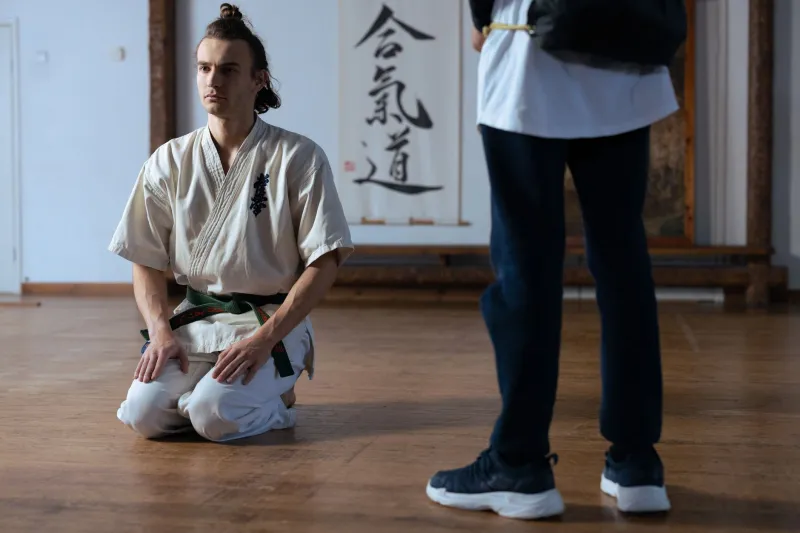
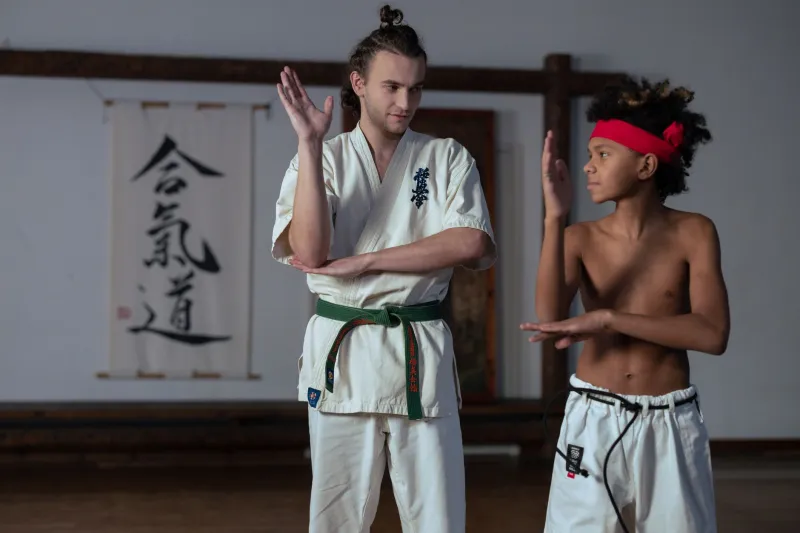
When Marcus Webb, a former Division I linebacker turned strength coach at a university in Ohio, first encountered aikido at the age of thirty-four, he expected a gentle art suited to smaller practitioners—something far removed from the high-force, high-impact world he had inhabited since adolescence. What he did not expect was to have his entire understanding of the human body dismantled and rebuilt over the course of three years.
"I had spent twenty years thinking about the body in terms of horsepower," he says. "Torque, load capacity, fiber recruitment. And then I walked into a dojo and watched a sixty-year-old woman redirect a two-hundred-pound man using what looked like almost no force at all. I didn't have a framework for what I was seeing."
What Webb was observing was not a trick of leverage alone, though leverage was part of it. He was witnessing the practical expression of a body philosophy that Japanese martial traditions have refined over centuries—one that understands human movement not as the output of isolated muscle groups working against resistance, but as the coordinated expression of the whole body's structural intelligence, animated by something the tradition calls ki (気).
Two Maps of the Same Territory
Western sports science and Japanese martial philosophy are, in a meaningful sense, attempting to map the same territory: the human body in motion, under stress, at the edge of its capacities. But the maps they produce look almost nothing alike, and the differences between them have significant implications for how injury, recovery, and peak performance are understood.
The Western biomechanical model—dominant in American physical therapy, athletic training, and sports medicine—is fundamentally mechanical and reductive. It identifies discrete structures (muscles, tendons, joints, fascia), measures forces acting upon them, and intervenes when those forces exceed the structure's tolerance. This model has produced extraordinary advances in surgical technique, rehabilitation protocol, and performance optimization. Its predictive power for certain categories of injury is unmatched.
But it has limitations that practitioners are increasingly willing to acknowledge. It struggles to account for why two athletes with nearly identical structural profiles sustain injury at dramatically different rates. It has difficulty explaining why certain forms of pain persist long after tissue damage has healed. And it has no satisfying framework for the phenomenon that martial artists, yoga practitioners, and certain elite athletes describe as the experience of the body "opening"—a state of effortless power and fluid coordination that seems to transcend what mechanical analysis would predict as possible.
Japanese martial philosophy, particularly as expressed in aikido and judo, approaches the body through a different set of organizing concepts. Central among these is ki—variously translated as life force, vital energy, or internal power—which is understood to flow through the body along pathways (meridians in the broader East Asian medical tradition) that connect the surface of the body to its deepest structures and to the environment beyond the skin. The martial body is not a machine to be optimized. It is a landscape through which energy moves, and the practitioner's task is to cultivate conditions that allow that movement to be unobstructed, coherent, and responsive.
Hara: The Body's True Center
One of the most practically significant concepts in Japanese martial body philosophy is hara (腹)—the physical and energetic center located approximately two inches below the navel, known in Chinese medicine as the dan tian. In aikido, judo, and virtually every traditional Japanese martial discipline, hara is understood as the body's true center of gravity and the source of its most stable, powerful movement.
This is not merely metaphorical. The practical instruction to "move from hara" produces measurably different biomechanical patterns than the instruction to "engage your core"—even though both directives are, in part, referring to the same anatomical region. Moving from hara involves a quality of downward settling, of weight dropping into the ground through the legs, that creates a kind of rooted stability fundamentally different from the braced, tension-based stability that core-activation cues typically produce.
Physical therapist and certified judo instructor Keiko Harrington, who practices in Denver and works with a client base that includes both martial artists and professional athletes, has spent the past decade attempting to bridge these frameworks clinically. "What I see consistently," she explains, "is that athletes who have been trained exclusively in Western movement paradigms tend to generate force from the periphery—from the limbs outward. And that pattern creates a certain fragility at the joints, particularly the hip, knee, and shoulder. When I introduce hara-centered movement, we see a redistribution of load that the biomechanical model would describe as improved force transmission through the kinetic chain. But the athlete experiences it as something different—as ease, as flow."
Ki Flow and the Fascial Network
For decades, the concept of ki flowing through meridian pathways was dismissed by Western medicine as unscientific—a pre-modern metaphor with no anatomical correlate. That dismissal has become considerably more complicated in the past twenty years, as research into the fascial system has revealed a network of connective tissue that envelops every structure in the body, transmits mechanical force across the entire organism, and contains a density of sensory receptors that rivals the nervous system in its sophistication.
The fascial network's properties—its continuity, its fluid dynamics, its responsiveness to both mechanical and thermal stimuli—bear a striking functional resemblance to the meridian system's described behavior, and a number of researchers have proposed that the meridian pathways may represent the experiential mapping of fascial lines rather than distinct anatomical structures. This hypothesis remains contested, but it has opened genuine dialogue between practitioners of East Asian medicine and Western anatomists that would have been unthinkable a generation ago.
For American athletes and coaches, the practical implication is significant: the ki pathways that an aikido practitioner learns to cultivate and direct may be, in physiological terms, the fascial lines that sports scientists are increasingly recognizing as central to injury prevention and movement quality. The two traditions may be describing the same phenomenon in different languages.
Ukemi: The Intelligence of Falling
Perhaps no single practice better illustrates the divergence between Western and Japanese body philosophy than ukemi (受け身)—the judo and aikido art of falling safely. In Western athletic training, falling is treated as a hazard to be avoided; protective equipment, padding, and technique coaching are all oriented toward minimizing the frequency and impact of falls. The body's relationship to the ground is understood primarily as a collision to be managed.
In judo, ukemi is among the first and most extensively developed skills a practitioner learns. The goal is not to avoid the ground but to develop a fluid, intelligent relationship with it—to understand how to receive the force of a fall through the entire body rather than concentrating it in a single vulnerable point. The body learns to yield, to redirect, to absorb impact through coordinated whole-body response rather than braced resistance.
Traumatologist and former collegiate judoka Dr. Samuel Park, now practicing in Chicago, argues that ukemi training represents one of the most sophisticated fall-prevention and injury-resilience protocols available—one that Western sports medicine has largely overlooked. "We spend enormous resources on proprioceptive training and balance work," he notes, "but almost nothing on teaching athletes how to fall well. Judo figured this out a century ago."
Bridging the Two Frameworks
The practitioners working at the intersection of Japanese martial body philosophy and Western sports medicine are not arguing for the wholesale replacement of biomechanics with traditional concepts. They are arguing for expansion—for the recognition that the body's intelligence exceeds what any single framework has yet fully described.
What ki, hara, and ukemi offer is not mysticism. They offer a set of experiential and practical orientations that produce real, measurable outcomes in movement quality, injury resilience, and recovery—outcomes that Western biomechanics can observe and, increasingly, begin to explain, even if it cannot yet fully account for them within its existing models.
For American athletes accustomed to thinking of their bodies as instruments to be driven toward performance targets, the Japanese martial tradition offers something more fundamental: a relationship with the body as a living intelligence worthy of study, cultivation, and deep respect. The river within does not flow harder when forced. It flows best when the conditions for its movement are honored.