Not Found, But Received: How Japanese Philosophy Is Freeing Americans from the Tyranny of Passion

Somewhere between the motivational poster and the career counselor's worksheet, something went wrong. For decades, American culture has handed its young people a deceptively simple instruction: find your passion, and the rest will follow. It sounds like liberation. In practice, it has become one of the more reliable engines of modern anxiety.
The question is not whether meaningful work exists. It does. The question is whether it can be hunted — whether passion is a thing one locates through sufficient introspection, the right personality assessment, or a well-timed gap year. An increasing number of Americans, exhausted by the search, are discovering that Japanese philosophical traditions offer a fundamentally different answer.
The Weight of the Blank Map
Consider the particular dread that descends on a college junior who, for the third consecutive year, cannot answer the question: What do you want to do with your life? Or the mid-career professional who, having achieved what she was told to pursue, sits at a desk that feels strangely airless. These are not stories of failure. They are stories of a framework that was never designed to bear the weight placed upon it.
The Western model of vocation — rooted partly in Romantic idealism and partly in market-driven self-optimization — positions the individual as both the architect and the excavator of meaning. You must first discover who you are, then construct a life that reflects that discovery, then market that life to employers or clients who will reward your authenticity. Each step demands a kind of certainty that human experience rarely provides on schedule.
The result, as many therapists and career coaches across the United States now observe, is not clarity. It is paralysis dressed in the language of potential.
Ikigai and the Refusal to Rush
The Japanese concept of ikigai — often translated, imperfectly, as "reason for being" — has entered American wellness discourse with considerable enthusiasm over the past decade. It has appeared on bestseller lists, in corporate retreats, and across social media in the form of a now-familiar Venn diagram: four overlapping circles representing what you love, what you are good at, what the world needs, and what you can be paid for. The center, where all four intersect, is presented as ikigai.
This diagram is useful. It is also, Japanese scholars and practitioners are quick to note, a significant simplification.
In its original cultural context, ikigai is less a destination than a disposition. It does not describe a fixed point one locates and then occupies permanently. It describes a quality of aliveness — a sense that one's daily existence carries weight and direction. Crucially, this quality is understood to emerge through sustained engagement with life, not to precede it. A retired schoolteacher in Okinawa may find her ikigai in the morning ritual of tending her garden. A young craftsman in Kyoto may discover his in the particular resistance of wood beneath a well-held plane. Neither searched for these things. Both arrived at them through patient, repeated contact with ordinary life.
The philosopher Michiko Kumano, who has written extensively on ikigai in contemporary Japanese society, emphasizes that the concept carries an inherent humility. It does not ask what you were born to do. It asks what, in this moment, makes waking up feel worthwhile. The question is smaller, more honest, and — paradoxically — far more answerable.
Michi: The Way That Walks You
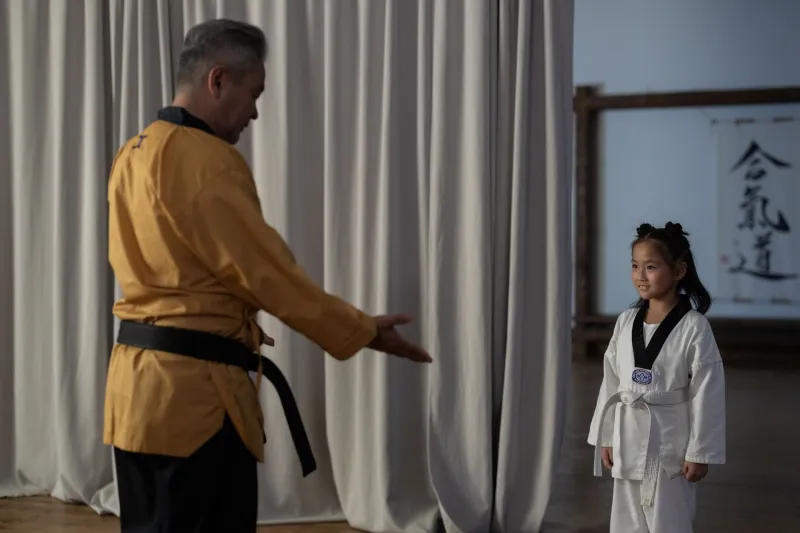
Deeper still is the concept of michi — 道 — the same character that names this publication. Translated as "way" or "path," michi appears throughout Japanese culture in compound words that describe not merely activities but entire modes of being: kendo (the way of the sword), chado (the way of tea), shodo (the way of calligraphy). In each case, the discipline is understood as a path that transforms the practitioner through sustained, humble practice — not a skill set one masters and then moves beyond.
What michi implies, and what Western career culture systematically obscures, is that the path has its own intelligence. In Zen teaching, there is a persistent metaphor: the student does not choose the way so much as the way chooses the student. This is not passivity. It is a particular kind of receptivity — the willingness to remain present to what each stage of practice reveals, rather than insisting on knowing the destination before beginning.
For Americans conditioned to treat career as a project of self-invention, this inversion can feel deeply uncomfortable. It asks something that contemporary culture rarely asks: trust the process even when the process offers no guarantees.
What Surrender Actually Looks Like
None of this is an argument for aimlessness. Japanese traditions are, if anything, more demanding about commitment and discipline than their Western counterparts. The tea master does not wander casually toward mastery. The calligrapher does not hold the brush loosely in every sense. What these traditions refuse, however, is the notion that one must arrive at perfect self-knowledge before committing to a direction.
In the Zen framework, clarity is not a prerequisite for action. It is frequently a consequence of it. You begin — imperfectly, uncertainly — and the practice itself begins to speak. Preferences sharpen. Aptitudes reveal themselves. What initially felt like obligation gradually acquires the texture of calling. This is not the dramatic epiphany that American culture tends to celebrate. It is quieter, more durable, and — for many who have lived it — more real.
Dr. Aaron Aiken, a psychologist based in Portland who incorporates Japanese philosophical frameworks into his practice with burned-out professionals, describes this shift as "loosening the grip on the outcome long enough to notice what the hands already know." His clients, he reports, are often surprised to discover that meaning was not absent from their work. It had simply been obscured by the relentless pressure to evaluate whether the work was sufficiently meaningful — a question that, asked too loudly and too often, tends to drown out the quieter answer already present.
The Practice of Not Knowing
There is a concept in Zen Buddhism — shoshin, or "beginner's mind" — that describes the openness available to someone who has not yet decided what something means. In the beginner's mind, as Shunryu Suzuki famously observed, there are many possibilities. In the expert's mind, there are few.
Applied to career and vocation, beginner's mind is not a consolation prize for those who haven't figured things out. It is a genuine practice — the deliberate cultivation of openness to what work, relationship, and daily life are actually offering, rather than what one has decided they should be offering.
For Americans carrying the particular exhaustion of a culture that has monetized self-discovery and gamified purpose, this practice asks something both simple and difficult: to stop treating uncertainty as a problem to be solved, and to begin treating it as a condition through which something real might, in time, arrive.
The path, in this tradition, does not wait for you to understand it before it begins. It begins the moment you take the first step — not toward a destination you have already mapped, but toward whatever is honestly, quietly, present.
That, perhaps, is where the voice of the way has always spoken most clearly.