Releasing the Grip: What Japanese Surrender Teaches High-Achieving Americans About the Art of Letting Goals Find You
There is a particular kind of exhaustion that does not register on any medical chart. It arrives not in the body but somewhere behind the eyes — a hollowness that persists even after the promotion is secured, the marathon is finished, the inbox reaches zero. Millions of Americans know this feeling intimately, yet the prescribed remedy is almost always more: more discipline, more optimization, more relentless forward motion.
Japanese tradition, across several of its most enduring disciplines, offers a different diagnosis entirely.
The Trouble with Forcing
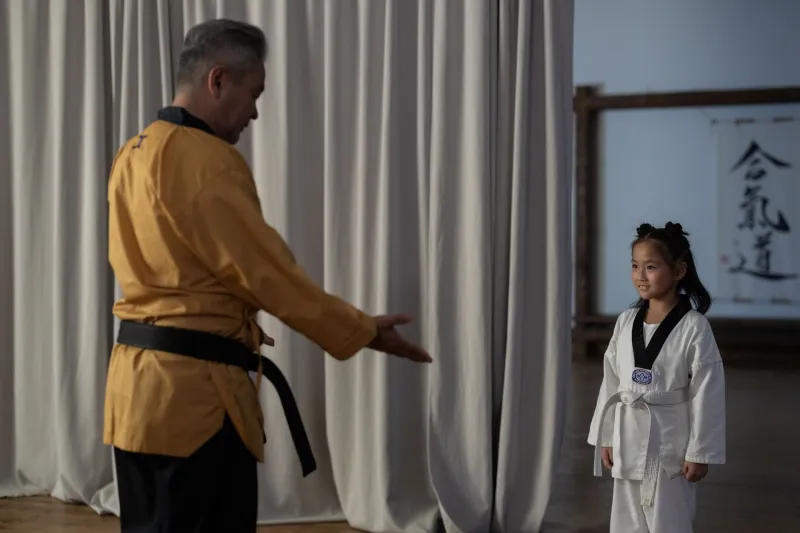
Consider the martial arts concept of mushin — literally translated as "no-mind" — a state cultivated extensively in Zen-influenced practices such as aikido, kendo, and iaido. In mushin, the practitioner is not emptied of intention but rather freed from the anxious surveillance of intention. The mind ceases to narrate its own performance. Technique, accumulated through years of disciplined repetition, is permitted to arise on its own terms.
What strikes Western observers first is the apparent paradox. To achieve mastery, the practitioner must stop trying to achieve mastery in the way ambition typically understands that phrase. The effort is real and rigorous — no one arrives at mushin without thousands of hours of deliberate practice — yet the final step into genuine fluency requires releasing the very grasping that made the practice possible.
American culture is exceptionally good at the first phase. It is the second that tends to confound us.
Te-Ire: The Art of Careful Attention Without Clutching
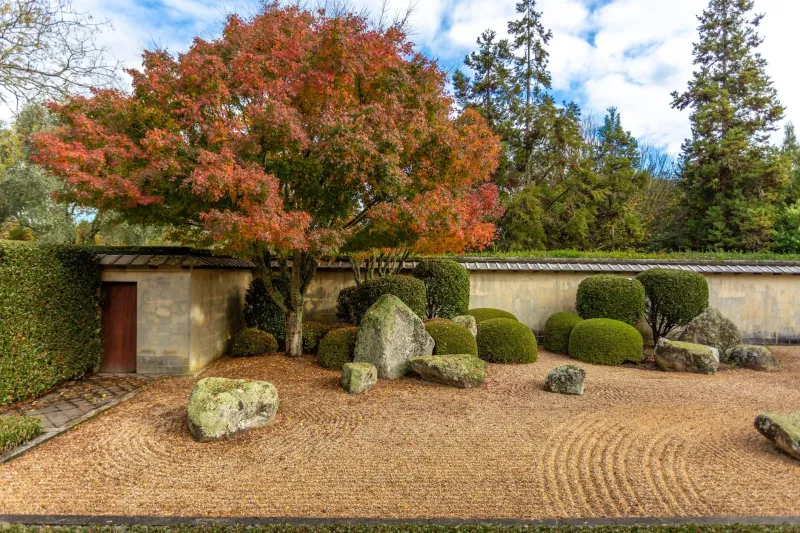
Less widely discussed outside Japan, te-ire is a concept that appears across traditional arts — from the maintenance of a bonsai garden to the care of ceramic tools in a tea practice. Translated roughly as "giving one's hands" or "tending with care," te-ire describes a mode of engaged attention that is neither passive nor grasping. The practitioner gives full presence to what stands before them without imposing a rigid vision of what it must become.
A bonsai master practicing te-ire does not force the tree into a predetermined shape. He studies the tree's own nature — the direction of its growth, the particular quality of its response to light — and works with that nature rather than against it. The vision for the tree emerges through sustained, responsive attention, not through the projection of will.
Applied to the domain of career, creative work, or personal development, te-ire suggests something quietly revolutionary: that the path forward is frequently revealed through attentive presence rather than aggressive planning. This is not the same as passivity. It demands a quality of attention that is, in its own way, more demanding than conventional striving — because it requires the practitioner to remain genuinely open to outcomes that were not pre-specified.
What the Research Is Beginning to Confirm
Psychologists studying high performance have arrived at findings that resonate with these ancient frameworks in striking ways. Research on what Mihaly Csikszentmihalyi called "flow states" — experiences of effortless, absorbed engagement — consistently shows that such states are undermined by excessive self-monitoring. Athletes, musicians, and executives who perform at the highest levels frequently describe peak moments in terms that echo mushin: a disappearance of self-consciousness, a sense that the right action arose without deliberate calculation.
Similarly, work in the field of acceptance-based therapies — particularly Acceptance and Commitment Therapy — has demonstrated that the willingness to hold goals lightly, without fusing one's identity to specific outcomes, is associated with greater psychological flexibility and, paradoxically, with more sustained progress toward meaningful objectives.
The Japanese traditions named this dynamic centuries before the clinical vocabulary existed to describe it.
Dojo Lessons for the American Workplace
Practitioners of aikido in the United States often describe a moment in their training — sometimes arriving years in — when technique stops being something they do and begins being something that happens through them. Instructors at dojos from Portland to Philadelphia report that this transition is routinely preceded by a period of acute frustration, in which the student's effortful striving begins to actively interfere with progress.
The instruction given at this juncture is rarely comfortable for American students accustomed to the logic of linear improvement: Try less. Receive more.
This counsel is easily misread as an invitation to reduce effort. It is nothing of the kind. What it asks of the student is a subtler and more difficult thing — the willingness to release the compulsive monitoring of one's own performance, to trust the body's accumulated knowledge, and to remain present to what is actually occurring in the encounter rather than what one has planned for it to be.
The application to professional life is not difficult to trace. A negotiator who is rigidly attached to a specific outcome frequently misses the signals that would allow a superior agreement to emerge. A designer who cannot release her initial concept may never discover the more elegant solution hiding one step beyond it. A leader who must always be the one driving forward may exhaust his team and foreclose the contributions that would have made the whole greater than its parts.
Surrender as Discipline
It is worth being precise about what the Japanese framework of surrender does and does not mean in this context. It does not counsel indifference to outcomes, nor does it romanticize passivity. The tea master who embodies mushin during a ceremony has spent years in rigorous, exacting preparation. The martial artist who releases self-consciousness in the dojo has earned that release through disciplined repetition. Te-ire is not neglect; it is, if anything, a more sustained and demanding form of care than anxious grasping allows.
What these traditions are asking Americans to consider is not whether to pursue their goals but how — and specifically whether the white-knuckled, self-surveilling, outcome-obsessed mode of pursuit that contemporary culture celebrates is actually the most effective path to what they seek.
The evidence, both ancient and modern, suggests it frequently is not.
Finding the Way by Ceasing to Chase It
The name of this publication — 道の声, Michi no Koe, the Voice of the Way — carries within it a particular kind of instruction. A voice is not seized; it is heard. The Way, in the Japanese philosophical sense, is not a destination to be captured but a current to be entered. It asks of us not that we abandon direction but that we loosen our grip enough to feel which way the current is already moving.
For the burned-out executive, the creatively blocked artist, the endlessly optimizing professional who has somehow arrived at success and found it strangely hollow — the Japanese principle of surrender offers not a retreat from ambition but a refinement of it. The goal does not disappear. What disappears is the anxious, grasping relationship to the goal that was costing more than it was yielding.
In that release, something unexpected tends to happen. The work becomes more fluid. The path becomes more visible. And what was sought with such exhausting intensity has a way of arriving — not because one stopped caring, but because one finally stopped clutching.
The Way, it turns out, has been trying to find you all along.