Before You Can Break the Form, You Must Become It: What Shu-Ha-Ri Teaches America About the Poverty of Modern Mentorship
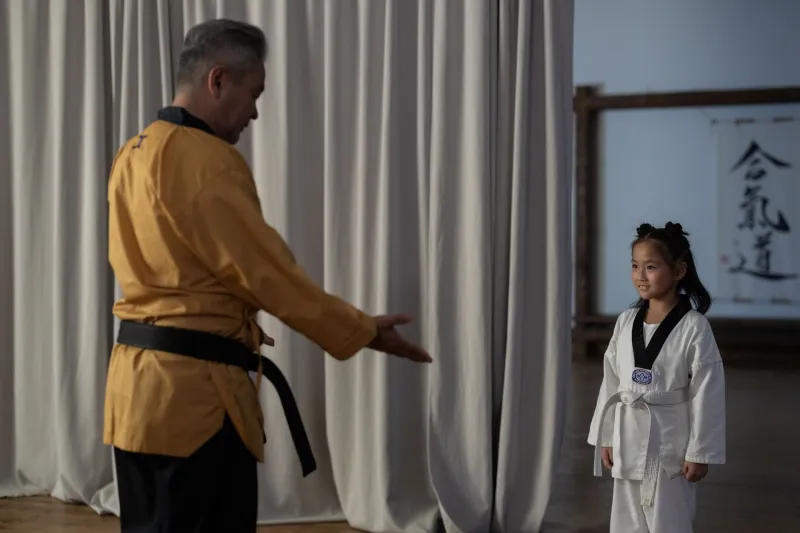
There is a moment familiar to every serious student of a Japanese martial art or traditional discipline — a moment when the teacher says nothing, corrects nothing, and yet communicates everything. The student sweeps the dojo floor for the hundredth time. The senior practitioner adjusts a single finger on the student's grip without explanation. No rationale is offered. No timeline for advancement is posted on the wall. And yet, something is being transmitted — something that no workshop curriculum or thirty-day onboarding program has ever successfully replicated.
This is the territory that the Japanese concept of shu-ha-ri (守破離) inhabits. Translated loosely as "protect, break, depart," it describes the three stages through which genuine mastery is cultivated in Japan's most demanding disciplines — from kendo and aikido to chado (the way of tea) and classical noh theater. It is a framework so quietly radical that, when placed beside the average American corporate mentorship program, it exposes not merely a difference in method but a difference in fundamental values.
The Architecture of Deep Learning
The first stage, shu (守), means to protect or preserve. In practice, it demands total submission to the received form. The student does not question the kata. The apprentice does not propose a better way to fold the fabric or draw the bow. The point is not blind obedience for its own sake but the recognition that form carries accumulated intelligence — centuries of refinement distilled into a single gesture. To improvise before absorbing that intelligence is, in the Japanese view, not creativity. It is waste.
This runs directly against the grain of American professional culture, where independent thinking is rewarded from the first week of employment, where "bringing fresh eyes" to a problem is considered a virtue regardless of experience level, and where the phrase "challenge the status quo" appears in nearly every corporate values statement. The American instinct is to question early and often. The shu stage asks something far more demanding: to trust what you do not yet understand.
The second stage, ha (破), means to break or transgress. Here, the student who has genuinely internalized the form begins, cautiously and with full awareness, to examine its edges. Variations are explored. The underlying principles behind the technique become visible precisely because the student has lived inside the form long enough to sense where it breathes and where it constrains. This is not rebellion. It is informed inquiry — and it is only possible because shu was honored completely.
The third stage, ri (離), means to depart or transcend. The master practitioner moves beyond both the form and its conscious interrogation into something that can only be called presence. Technique has dissolved into instinct. The rules are no longer followed because they have been fully absorbed. This is the stage that American culture most romanticizes and most frequently attempts to shortcut — the stage of the visionary, the innovator, the disruptor. What the shu-ha-ri framework makes plain is that ri without shu is not mastery. It is performance.
What American Mentorship Gets Wrong
American mentorship, where it exists at all, tends to be episodic rather than sustained. A senior colleague agrees to meet monthly for coffee. A manager provides quarterly feedback. A corporate sponsor advocates for a junior employee's promotion. These are not without value, but they share a structural limitation: they are fundamentally transactional. Information is exchanged. Advice is dispensed. The relationship is bounded by professional courtesy and organizational hierarchy rather than by a shared commitment to the transmission of something deeper.
Japanese apprenticeship culture, by contrast, operates on a logic of uchi-deshi — the live-in student who inhabits the master's household or studio, absorbing not just technique but the entire orientation of a life devoted to a discipline. Even in its more contemporary institutional forms, the Japanese apprenticeship relationship is understood to carry mutual obligation. The master is responsible for the student's development across years, sometimes decades. The student, in turn, offers sustained attention, loyalty, and the willingness to be genuinely changed by the process.
This is not merely a cultural curiosity. Research in organizational psychology has consistently found that the quality of mentorship relationships — measured by depth, duration, and the degree of genuine investment on both sides — is among the strongest predictors of long-term professional mastery and institutional loyalty. The American epidemic of employee disengagement and rapid turnover may be, in part, a symptom of learning relationships that were never built to hold.
Quiet Adopters in Unexpected Places
A number of American organizations are beginning to take these ideas seriously, though rarely under the banner of shu-ha-ri itself. In the culinary world, a handful of serious restaurant groups have instituted extended apprenticeship tracks modeled explicitly on the Japanese shugyo tradition of austere, intensive training. Young cooks are asked to spend months mastering a single station before advancing — not because the work is simple, but because depth of attention is considered a prerequisite for genuine skill.
In the technology sector, certain engineering teams — particularly those working in domains where catastrophic error carries real consequence, such as aerospace and medical devices — have quietly moved toward mentorship structures that emphasize supervised imitation over early independent problem-solving. The logic is precisely that of shu: before a junior engineer proposes a novel solution, they must demonstrate fluency in the established ones.
In the martial arts community, which has carried these principles on American soil since the mid-twentieth century, the shu-ha-ri framework has never been absent. What is shifting is the willingness of practitioners outside the dojo to take its lessons seriously as a model for professional development rather than treating them as the quaint customs of a foreign discipline.
The Relationship as the Curriculum
Perhaps the most disorienting aspect of the shu-ha-ri model for American sensibilities is its insistence that the relationship between teacher and student is not merely the vehicle for learning — it is the learning. The master communicates through proximity, through corrected posture, through the quality of attention they bring to the student's work. The student learns through sustained observation, through the willingness to remain in discomfort without demanding explanation, through the slow accumulation of embodied understanding that no manual can substitute for.
This is what the voice of the way — michi no koe — has always carried: not a set of techniques to be downloaded and deployed, but an invitation into a relationship with a discipline that is, at its core, a relationship with one's own deepest capacity. American mentorship, at its best, has always gestured toward this. The shu-ha-ri tradition offers something more precise: a map of the terrain that lies between the first lesson and the moment when the student, having truly absorbed the form, is finally free to leave it behind.