No Ledger at Midnight: What the Temple Bell Leaves Uncounted
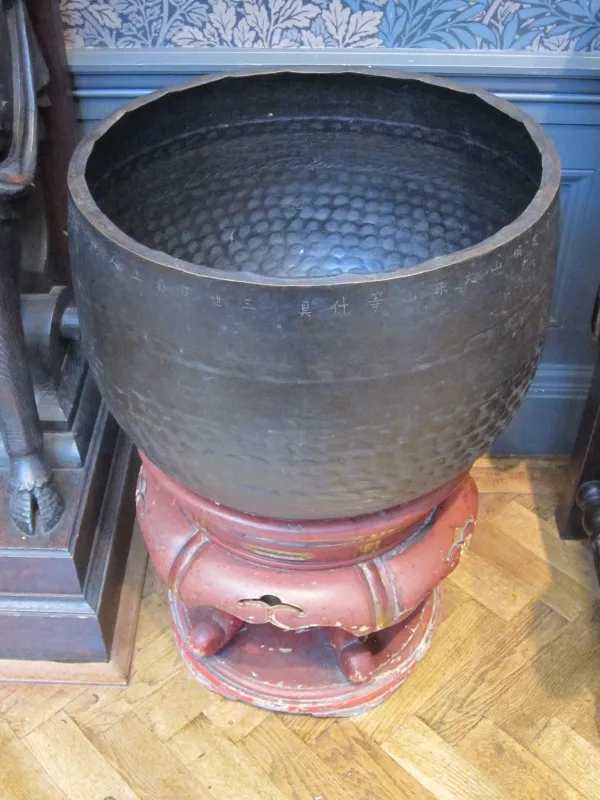
Photo: Reptonix free Creative Commons licensed photos, CC BY 3.0, via Wikimedia Commons
In the final weeks of 2026, American inboxes begin to fill with year-end reviews. There are spreadsheets of books read and miles run, screenshots of professional wins, lists of habits kept and habits broken. Even the language of rest has been recruited into the ledger: sleep scores, recovery percentages, days meditated. The year is asked to justify itself.
In Japan, another ritual takes place on December 31. Temple bells ring out across cities and towns in a practice known as Joya no Kane, the New Year's Eve bell. The bells are struck 108 times, usually 107 before midnight and the last just after. The number corresponds to the 108 earthly desires, or bonnō, that Buddhist tradition identifies as sources of suffering. Each strike is not a countdown to a better self. It is an invitation to let something go.
A Bell That Refuses to Keep Score
The ritual is simple and austere. A large bronze bell hangs in a temple bell tower. A wooden beam is swung against it. The sound is deep, uneven, and slow. It does not resolve into a clean note. It blooms, spreads, and fades. Between strikes there is silence, long enough for the previous sound to disappear.
There is no screen to track the count. There is no personal best. The bell does not care whether the year was productive. It does not ask for a summary of wins and losses. It marks the passage of time without converting that passage into data.
This is not because the ritual is indifferent to human effort. It is because the ritual understands effort differently. The 108 desires are not achievements to be optimized. They are attachments to be noticed and released: the desire for praise, the desire for certainty, the desire to be seen as someone who has it together. The bell does not eliminate those desires. It gives them a sound and then lets the sound go.
The American Ledger
American year-end reviews are not foolish. Measurement can be useful. A person who wants to save money, repair a relationship, or learn an instrument may benefit from looking honestly at the past twelve months. The problem arises when the ledger becomes an identity. When the year is reduced to a score, the person becomes a scorekeeper. The future is then imagined as another round of optimization.
2026 has given Americans plenty of material for anxiety. Public life remains noisy, work remains uncertain, and the temptation to measure one's way into security is strong. The year-end review promises control. It says: if you can account for the past, you can manage the future. The temple bell makes a more modest claim. It says: you can release the past without fully accounting for it.
That release is not the same as forgetting. It is closer to setting down a heavy bag at the end of a long walk. The bag does not vanish. The walk does not become shorter. But the body remembers what it feels like to stand without the weight.
Releasing, Not Resolving
Many Americans enter January with resolutions. The temple bell suggests another posture: attention without resolution. A resolution looks forward and demands change. A release looks backward and asks for honesty. What am I still carrying that no longer needs to be carried? What have I been calling discipline when it is really fear? What have I been calling failure when it is really information?
The bell does not answer those questions. It creates a space in which they can be asked. The 108 strikes are not a therapy session. They are a rhythm. Each strike is a small ending. Each silence is a small beginning. By the final bell, the year has not been solved. It has been placed in a larger frame.
Japanese temples vary in how they conduct the ritual. Some welcome visitors to strike the bell. Others keep the practice internal. In Japanese American communities, the New Year's Eve bell has become one way of maintaining a connection to heritage while living in the United States. For Americans outside those communities, the practice deserves care. It is not a decorative countdown for parties. It is a religious and cultural ritual with its own protocols.
A Practice for the Last Hour
A reader who wants to mark the end of 2026 without a scorecard does not need to imitate a temple exactly. The first step is to put down the ledger. No list of accomplishments. No audit of habits. No plan for a superior 2027. The second step is to make room for silence. This can be difficult in a culture that treats silence as an empty slot to be filled. The bell teaches that silence is not empty. It is the space in which a sound can be heard.
The third step is to name one attachment and let it go. Not ten. Not a system. One. A grudge, a expectation, a story about what the year should have been. Name it privately. Do not turn it into a resolution. Then listen to the room. If a bell is nearby, listen to the bell. If not, listen to the furnace, the traffic, the rain. The point is not to reproduce a Japanese temple in an American living room. The point is to practice release without demanding a receipt.
When the last bell fades, the new year has not begun as a project. It has begun as a space. That space is not empty of responsibility. It is empty of the need to prove that the year was worth something. For Americans exhausted by the scorecard, that may be the quietest gift of all.